Britain and the Origins of the Industrial Revolution, Part 2: Population Growth and Improved Food Production

In Part 1 of our 7-part series on Britain and the origins of the Industrial Revolution, we introduced it as a time of gradual but fundamental change (transformation) in Britain from a dependency on organic resources and means of production to mechanized production using sources such as coal.  Along the way, Britain became more urbanized and expanded its markets domestically and internationally, becoming the world’s foremost power by the early to middle of the 19th century.  How did this happen?  What preconditions facilitated this transformation?   

Part 2 examines one of these preconditions: Improved Farming and Population Growth.

Improved farming and population growth provided essential preconditions for industrialization. Factory owners would need more people to grow their labour force and to buy their products.  More people required more food, and this growing demand hastened agricultural innovations that, in turn, facilitated population growth.  During the 17th century, farms gradually depended less on environmental whims and offered more predictable and productive yields.  Before these changes, people lived according to a traditional cycle of population and productivity.  When food production reached a limit based on available land and agricultural methods, the population reached a threshold, declined, and grew again until it reached production limits. This pattern stemmed from a system where agriculture involved subsistence for peasants and income for landlords and common lands were used for grazing livestock and fuel (e.g. wood).

Commercial Farming, Cash Crops and Enclosures

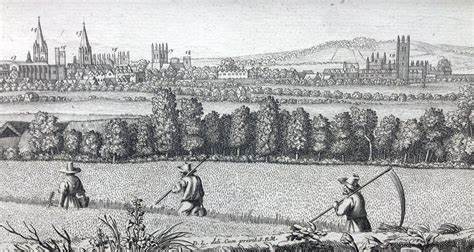
Various agricultural innovations drastically improved farm production and broke this cycle.  One fundamental change was the development of market-oriented agriculture. Landowners, mainly nobles, increasingly fenced off common lands to create land enclosures focused on growing cash crops for sale and export rather than local consumption. Governments, who sought noble support and tax revenues, supported these measures against peasant resistance – sometimes with armed forces.  This displaced peasants and many became wage earners on far or factories. 

Farmland enclosures

These cash crops created a greater demand for larger fields. Historian John Merriman writes, “Between 1750 and 1850 in Britain, 6 million acres – or one-fourth of the country’s cultivatable land – were incorporated into larger farms. (518)  The trend toward commercial agriculture was well on its way.

Farming Innovations: Crop Rotation and Animal Husbandry

As farming became more commercialized, farmers became more specialized and adopted practices such as crop rotation.  Crop rotation differed from conventional agriculture, which saw farmers plant the same crop in the same place every year while leaving some fields fallow for two or three years to replenish their nutrients. Problems arose as these crops drew the same nutrients out of the soil, thus depleting it. Moreover, pests and diseases could establish themselves more readily.  Crop rotation addressed these problems.  Planting different crops sequentially on the same land optimizes soil nutrients and helps prevent pests and weed infestations. For instance, a farmer might plant corn one season and beans the next. 
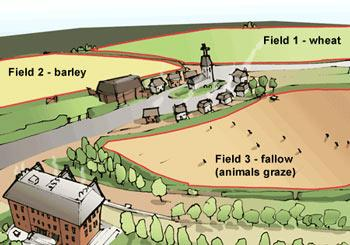
Crop rotation

Healthy soil and healthy crops drastically improved food production.  Innovators like Robert Bakewell (1725-1795) improved animal husbandry, enhancing food supplies – particularly protein. 

Technological Advances

Technological advances also increased productivity. Farmer Jethro Tull (1674-1741) created the seed drill that planted seeds in deep soil, a drastic improvement over simply casting seeds on or near the surface where they would be more vulnerable to the elements or animals. Iron plows allowed farmers to turn the soil more deeply.
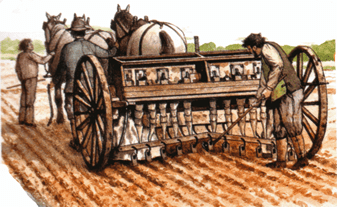
The seed drill.

Charles “Turnip” Townsend (1674-1738) learned how to cultivate sandy soil with fertilizer from the Dutch and expanded arable lands (Kagan 495).

More production and more food options.

Throughout the next century, these farming innovations meant fewer people could produce more food, and more food could be grown per acre.  Improved food production also created more varied and calorie-rich diets –fundamental contributors to population growth.  The potato and maize – two nutritious foods from the Americas played essential roles.  Imported from the Americas, the potato became especially widespread throughout Europe.  Donald Kagan writes, “On a single acre, a peasant family could grow enough potatoes for an entire year. (Kagan, 497).  These local developments were bolstered by what Alfred Crosby called the “Columbian Exchange” – the exchange of food, animals, and disease between Europe and the Americas—from this, Europe gained maize, potatoes, sweet potatoes, and cod.  Indentured servants and slaves – laboured to produce these essential foodstuffs. 
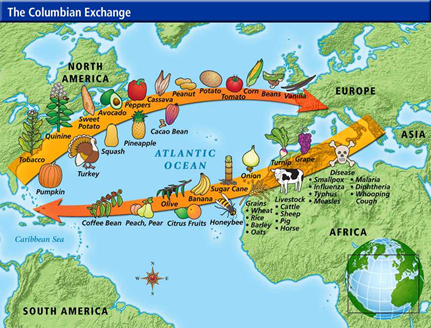
Overall, production rates soared. Merriman points out, “England produced almost three times more grain in the 1830s than the previous century.” (Merriman 518) Besides feeding more people, farms produced more fodder for livestock and helped create a more reliable milk and meat source. More livestock also meant more fertilizer (manure).  Fish like the cod harvested off Canada’s east coast offered another protein source. 

Nutrition, Sanitation and Disease

Better nutrition went hand in hand with improved disease prevention and treatment. Diseases like tuberculosis, influenza and dysentery still took many lives but conditions generally improved as cities gradually improved water supplies and waste management.  Medical practices only played a minor role until well into the 19th century. However, Edward Jenner’s vaccines for smallpox in the 1790s helped contain lethal outbreaks, and vaccinations would help stave off other diseases in the next century.  
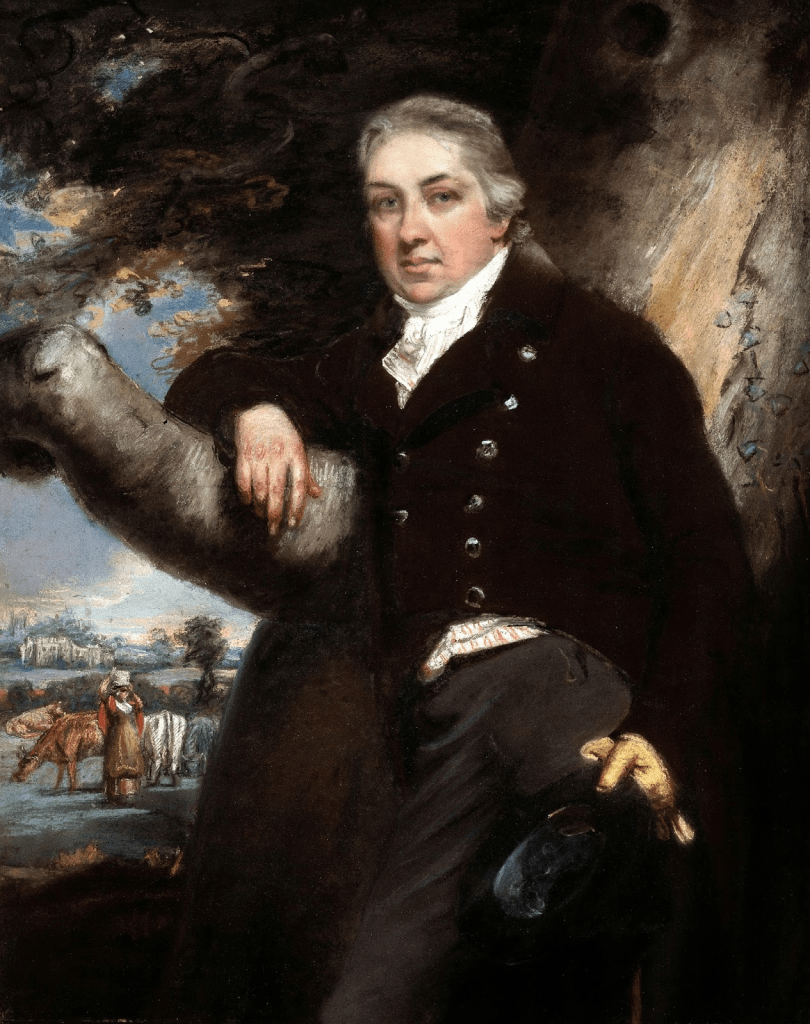
Edward Jenner (1749-1823)

Rapid Population Growth

Over the eighteenth century the turn of the century, the population of England and Wales increased from about 5.5. million to approximately 10 million and 20.9 million by 1850.  (Cipolla, 29)   Growing numbers in urban centers like Manchester provided cheaper labour for factories to flourish.  Moreover, the combined factors of population growth and increased income per head led to more purchasing power and growing demand for products – – two essential factors for industrial growth.   

 Stay tuned for our next blog in our 7-part series on the origins of the Industrial Revolution in Britain.

Part 3: Access to Foreign Markets and Capital Investment

Disease and European Expansion to the Americas 

After Christopher Columbus landed in San Salvador in 1492, Europeans settled and eventually conquered the Americas. How did Europeans overwhelm an Indigenous population that scholars have estimated to be between 60 and 100 million? An essential factor involves the drastic population decrease of Native Americans over the following two centuries. The estimated numbers are staggering, ranging between 70 to 95%!

Scholars cite numerous reasons for this devastation, including superior European technology (e.g., weapons), brutal European tactics, and disease.  Of these factors, diseases carried by Europeans stand as the main culprit of the Native American decimation. Europeans also succumbed to illness but not nearly to the extent of the Indigenous population.

Why did the exchange of germs between Europeans and Native Americans lead to such lopsided results? What gave Europeans a more resilient immune system? To find answers, we need to venture back thousands of years.

Farming and Livestock. Scholars like Alfred Crosby and Jared Diamond argue that Europe’s biological advantage stemmed from the Agricultural Revolution that scholars estimate began c 8000 BC. This gradual transition from hunting and gathering to farming led to significant changes that would facilitate European expansion many centuries later.

Two overarching factors come into play. The first is the domestication of diverse animal species. Alfred Crosby points out that the Old World domesticated a wider range of animals than New World communities. Compare, he writes, “the American assemblage of livestock (dog, lamas, guinea pigs, and some fowl), with that of the Old World: (dogs, cats, cattle, horses, pigs, sheep, goat, reindeer, water buffalo, chickens, geese, ducks, horses and more.” (19)

Ancient Sumerians (c4500-1900BC), residing in the southern part of Mesopotamia, in the flatlands between the Tigris and Euphrates rivers (now south-central Iraq), stood as the eminent domesticators of animals in their time. Animal power allowed people to farm more land than human muscle could muster. Livestock provided a consistent food source – meat and milk – essential during poor cop seasons. Both factors yielded more food, more surplus and facilitated population growth.

More livestock also meant more interspecies exchange of a broader range of microbes. Animals and people died or became quite sick, but sustained contact gradually led to immunity to a comprehensive range of diseases. Smallpox, the flu, influenza, measles, and other ailments evolved from human and livestock interactions. Poxviruses, Crosby points out by way of example, “oscillated back and forth between humans and cattle to produce smallpox and cowpox.” (Crosby, 31) 

Population and “Crowd Disease” Secondly, higher and denser populations exacerbated this interplay of livestock and human. As technologies improved, more people (and animals) could live in smaller areas and encouraged greater microbial spread. The rise of cities further encouraged the spread of germs. More people breathe the same air, spend more time in proximity and are more likely to contact human waste and disease carriers like rodents and insects that thrived in dense human populations.

Of course, these increasingly immunized people from cities and large villages did not stay put. Sumerians and subsequent civilizations traded, travelled, moved, and fought battles and wars, leading to contact with other peoples, including hunter-gathers who lacked sophisticated immune systems. 

Centuries later, when Columbus reached the Americas, Europeans had developed an incredibly resilient immune system that could withstand the likes of smallpox, yellow fever, diphtheria, influenza, chickenpox, and a host of other diseases bred over centuries. Native Americans lacked the immune systems to cope with the microbial onslaught. American populations, new studies show, were higher and denser than previously assumed but still not comparable to European ones. As previously mentioned, a less diverse American livestock inventory meant a narrower field of microbial exchange.  

Disease alone did not decimate America’s Indigenous population, but it seems to be the main culprit. “Far more Americans died,” Jared Diamond writes, “in bed from European germs than on the battlefield from European guns and swords.” (201). Other factors certain exacerbated their impact. Thomas Benjamin points out that diseases “were accompanied and made more deadly by war, exploitation, slavery, and missionaries who brought dispersed people together in a large community.” (321). We must also note that diseases did not uniformly impact the Americas. Denser and higher populations saw higher mortalities. Some Native communities in the northern reaches of Canada did not feel the impact of Old World disease until the 19th and 20th centuries.    

Scholars still debate the topics such as population numbers and whether Europeans, at times, intentionally infected Native people. However, there is a growing consensus that Old World diseases led to the European conquest of the Americas more than any other factor. 

Glossary

Columbian Exchange. Alfred Crosby coined this term to describe the transcontinental transport and exchange of plants, animals, and diseases. 

Crowd Disease. A disease that can only be exchanged from person to person and therefore thrive in crowded populations.

Influenza. Flu, contagious respiratory disease.

Measles. A viral disease marked by red spots on the skin.

Microbes. A microorganism. Often referring to bacterium causing disease.

Pathogen. An agent that causes disease.

Smallpox. Viral disease became more virulent during the Renaissance (coinciding with Columbus’s voyage to the Americas). Arguably the most devasting disease to Native Americans. 

Selected Bibliography.

Benjamin, Thomas. The Atlantic World: Europeans, Africans, Indians, and Their Shared History, 1400-1900. New York: Cambridge University Press, 2009.

Crawford, Dorothy H. Deadly Companions: How Microbes Shaped our History. Oxford: Oxford University Press, 2017.

Crosby, Alfred W. Ecological Imperialism: The Biological Expansion of Europe, 900-1900. New Edition. New York: Cambridge University Press, 2004.

Diamond, Jared. Guns, Germs, and Steel. The Fates of Human Societies. New York: W.W. Norton and Company, 2017.

Hopkins, Donald R.  The Greatest Killer: Smallpox in History. Chicago: University of Chicago Press, 2002.

Kiple, Kenneth F. ed. The Cambridge World History of Human Disease. Cambridge: Cambridge University Press, 1993.

Martin, Charles. A Short History of Disease: Plagues, Poxes and Civilizations. Harpenden, Herts: Pocket Essentials, 2015. 

Watts, Sheldon. Epidemics and History: Disease, Power, and Imperialism. New Haven: Yale University Press, 1997.