Smallpox-The Global Killer


one of the scariest monsters on earth.” Dr. Michael Osterholm.

Smallpox, known by various names like “the speckled monster”, “the red plague”, “Hunpox”, and the “great pox”, was an undiscriminating killer of all races and classes. It might have killed Marcus Aurelius and almost finished Elizabeth I.  The Habsburg Emperor Joseph I died from the disease in 1711. Smallpox shaped migrations, influenced military outcomes and undermined governments. Over millennia, the disease spread worldwide and stood as one of the most formidable enemies of human existence, killing billions.

The quest to understand and combat smallpox had spanned centuries. In 1796, English physician Edward Jenner (1749-1823) achieved a historic breakthrough by creating the first vaccine. It was a milestone in the history of medicine but the disease lingered. Its continued impact into the 20th century is a stark reminder of the importance of eradicating such diseases.  1969, the World Health Organization (WHO) finally declared that smallpox was eradicated. 

What is Smallpox?                          

To fully appreciate the magnitude of this achievement, it is crucial to comprehend the nature of smallpox. We must understand its characteristics, its mode of transmission, and its impact on diverse populations worldwide.  Diseases happen when pathogens (the agents that cause disease) such as viruses, bacteria and fungi infect the tissue of a living being. Pathogens include viruses, bacteria, and fungi. They infect the tissue of living beings.  Symptoms occur when the pathogen releases toxins as they multiply, spread or even kill cells.  Diseases occur when pathogens infect the tissue of a living being.

Smallpox is a virus that is a parasite of animals, plants, and bacteria.  Some examples include the common cold, influenza, smallpox, AIDS, herpes, hepatitis, polio, and rabies. As parasites, viruses need a host to reproduce. They achieve this by infecting host cells and hijacking their machinery to survive and multiply. Outside of a host, viruses are inert. Contagious diseases can be passed between organisms (e.g. person to person) in various ways – direct contact (touch), indirect contact (with an infected object), and airborne (coughing, sneezing). When infection sets in, it sickens or even kills us.   

Like measles and whooping cough, smallpox is a so-called “crowd disease.” This term is used to describe diseases that spread rapidly in densely populated areas. They are particularly dangerous and difficult to control. This is due to their high transmission rates and potential for widespread outbreaks.    

Microscopic image of a virus

Smallpox is a Zoonotic disease. It is shared among people and sometimes between other animals like bats, monkeys, and livestock.  Smallpox infects humans but not other animals. Other zoonotic diseases include measles, HIV, AIDs, chicken pox, and SARS. Collectively, they are the deadliest diseases in human history.

Arguably the most lethal of the lot, smallpox is an influenza (flu)that scientists later discovered is caused by an Orthopoxvirus. (Snowden,87) The medical name for smallpox is variola virus. Virologists identify two kinds of smallpox. Variola major has a mortality rate of 25 to 30 percent. Variola minor has mild symptoms and a death rate of 1 percent or less. Variola major is the focus of this study.

What made smallpox so deadly?

Smallpox (variola major) has many dangerous traits, including its mode of infection and its adaptability to various climates. Regarding infection, it is highly contagious and transmitted mainly through droplets exhaled through coughing or sneezing. It can only be spread from human to human, not to other animals. The disease can also spread from the corpses of smallpox victims and contaminated items like linens.

Abetting its spread is that smallpox infects a host slowly with no immediate signs of illness. From the time of infection, the incubation period is nine to fourteen days. The infected experience symptoms such as fever, chills, headaches, and nausea. These symptoms could be confused with other ailments. Since symptoms do not appear for a week or two, people could unknowingly infect others for a week or two.  After incubation, the overt symptoms include lesioning and skin rashes.  Survivors could be blinded or permanently scarred. Some died. It ultimately kills by attacking the internal organs – the liver, lungs and heart.  Infants are the most vulnerable.  Survivors of smallpox did not become infected again, an essential trait that facilitated its eventual eradication. 

Smallpox also demonstrated a remarkable ability to survive in diverse climates. This includes the cooler temperatures of Northern Europe. This adaptability allowed smallpox to extend its reach far beyond the tropical regions where diseases like malaria thrived. Adaptability, contagiousness, and lethality made smallpox a pervasive and influential force in shaping human events. Its resilience, even in the face of diverse climates, underscores the gravity of this deadly disease’s impact on human history.

Smallpox and History

Scholars increasingly acknowledge the role of smallpox and other diseases in the unfolding of history.  In his 2019 book, Epidemics and Society: From the Black Death to the Present, Frank Snowden writes that diseases are “a major part of the ‘big picture’ of historical change.” They are crucial for understanding historical development. They include societal developments such as economic crises, wars, revolutions, and demographic change. (2)  Human history is littered with diseases like the plague, cholera, and the Spanish flu. Smallpox (variola major) is one of history’s most formative diseases and perhaps the deadliest.      

Origins  

Where did smallpox come from? Archaeological findings suggest smallpox and other diseases have a very long history. These diseases grew out of what sociologist Jonathan Kennedy calls “an epidemiological revolution.” This revolution followed hot on the heels of the Neolithic Revolution (c 10,000 to 8,000 BCE). This period saw some humans change from nomadic lifestyles to sedentary farm-based communities with more sustained interaction with domesticated animals.  (Kennedy, 43).  So, while we do not know the exact origins of smallpox, scholars have extrapolated its likely origins. Since it is a Zoonotic disease, closely related to cowpox found in animals like bovines and rodents, it likely grew out of the Neolithic period.

Early Cases. 

Even with today’s sophisticated archeological methods, it is difficult to determine the first cases of smallpox. The scant written records and rudimentary scientific knowledge of ancient peoples’ diseases mean that potential cases of smallpox could also be other diseases, such as measles, the bubonic plague or typhus.  Archeologists might have found evidence of instances of smallpox in ancient Egypt. Three mummies, including the young Pharoah Ramses V, who died in 1157 BC, were found with what looked like pockmarks. Written sources from Asia describe potential cases of smallpox in China (1122 BC) and India (1500 BC). Again, these are not definitive.

Smallpox and the Mediterranean

Whatever its specific origins, smallpox eventually spread throughout the world, enabled by denser populations and improvements in transportation technology that facilitated more human interactions through trade, migration and war.   Egypt, a potential source of smallpox, sits south of the Mediterranean Sea, a hub of interaction. As historian David Abulafia points out, “The sea routes of the Mediterranean have always provided a means for the transmission of pandemics,” like the Justinian plague in the sixth century AD and the Black Death in the fourteenth century AD. (144) 

Some scholars believe smallpox impacted the Peloponnesian War (431-404 BC), which saw Athens fight Sparta for regional supremacy.  In 430 BC, the Plague of Athens devastated that city, killing a quarter of the population over three years and severely weakening the Athenian war effort, thus facilitating Sparta’s victory. (Kennedy, 60). Other scholars have suggested measles or the bubonic plague. It is difficult to discern since contemporaries, as Abulafia points out, “saw these events as divine punishment rather than pathologies.” (144)  Thucydides is often cited for his observations of the Athenian plague but does not describe the disease symptoms in a manner that would verify it was smallpox. 

For some, smallpox is the prime suspect behind the Antonine Plague (164-165 AD) in the Roman Empire during the reign of Marcus Aurelius (161-180 CE). Fatality estimates vary but may have been in the millions. Historian Mark Thompson and others suggest that soldiers brought the disease back home after fighting in Mesopotamia. Contemporary Greek physician Galen described the symptoms as “diarrhea, high fever, and the appearance of pustules on the skin after nine days.” (Kerhaw 211).  By this time, the Roman Empire displayed vulnerabilities and epidemics such as the Antigone Plague, further weakening its resilience by disrupting the Roman economy, labour force, and army. 

More Reliable Accounts

We find more reliable accounts of smallpox and other diseases as written records improve.  However, only in the fourth century AD “can we find the first unmistakable description of smallpox in China. (Hopkins, 104).  There is some debate about how it initially entered China. Some argued that it first came from the Huns, a nomadic tribe to the north.  Hopkins, for instance, points to early accounts of what might be smallpox in China from around 250 BC and introduced by the Huns a few decades before the creation of the Great Wall. Some Chinese called it the “Hunpox” epidemic, reflecting their sense of its source. (Hopkins, 101) Again, the records are scant, so confirming that this “Hunpox” was smallpox is difficult. Other scholars challenge the “Hun origin” theory and suggest smallpox might have been introduced to China centuries later via India, along with the introduction of Buddhism around 65 AD. (Hopkins, 104). 

 Smallpox might have spread to the Korean peninsula around 48 AD. While Japan was separated from the mainland by water, the disease eventually reached the island country around 585 AD and wreaked havoc. Historian Charles Holcombe estimates that an epidemic in 735-737 AD may have killed a quarter of Japan’s population. (Holcombe, 118)

Smallpox became established as an “Old World Disease.” 

Smallpox eventually migrated throughout Europe, a continent significantly less densely populated and travelled than Asia, the Near East, and the Mediterranean until the early modern era. Historian Frank Snowden and other scholars suggest that the virus spread during the Crusades of the eleventh and twelfth centuries, as soldiers and pilgrims travelled back and forth between Europe and the Levant, the general area of what is now Israel, Lebanon, and Syria (97, Snowden). Over time, as European populations increased and interregional interactions became more frequent, smallpox and other diseases became endemic. 

Smallpox became endemic throughout most parts of Eurasia, or the “Old World.” Biologist Frank Fenner writes, “By 1000 AD, smallpox was probably endemic in the more densely populated Eurasian landmass from Japan to Spain and the African countries on the southern rim of the Mediterranean. (402).  By the 14th century, smallpox was established in Germany, Spain and France.  By the latter half of the 16th century, smallpox was endemic to Europe.

Smallpox, the “New World” and the Columbian Exchange

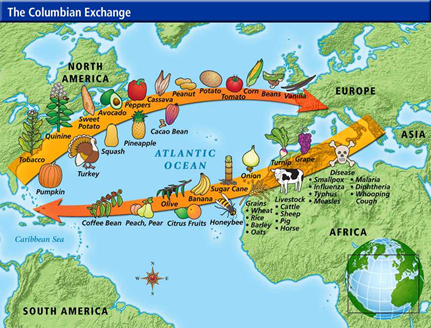
Smallpox finally made its way to the Americas in the sixteenth century.  Advances in navigation and shipbuilding and a growing appetite for trade with the faraway lands of India and China compelled European powers to seek reliable sea routes to these markets.  Christopher Columbus reached the Americas in 1492.  Later voyages and settlements led to what Alfred Crosby called the “Columbian Exchange,” the transatlantic transmission of technologies, foods, and diseases.  
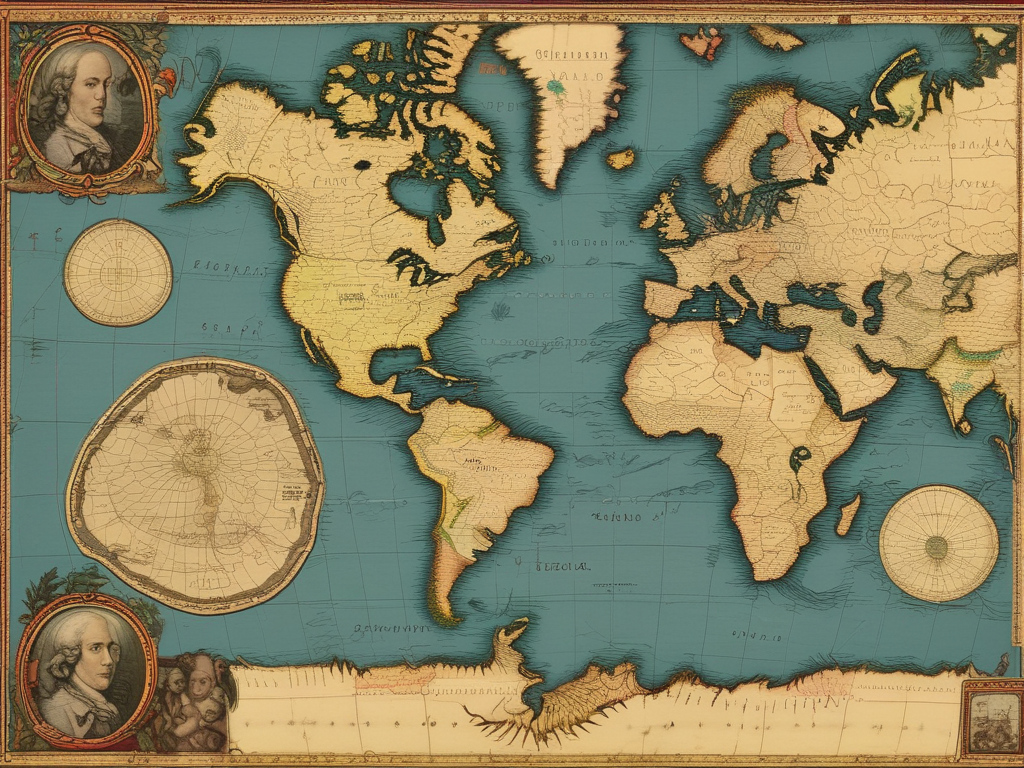
As part of this exchange, smallpox served as the primary biological culprit (other Old World diseases like measles contributed) in an epidemiological onslaught that would lead to the death of more than 90% of the indigenous population of the Americas (60.5 million in 1500 to 6 million a century later).

This demise facilitated the eventual European domination of the “New World. (Kennedy, 127).  Moreover, the decimation of the Indigenous population, coupled with malaria’s devastation of European settlers in the warmer parts of America, encouraged, from the late 17th century onwards, the import of African slaves who had developed more immunity and so provided a more secure labour force.  African slaves, travelling in tightly packed ships that served as incubators, also unwittingly spread smallpox and other diseases to the Americas.

Smallpox After 1600 AD

As the world became more interconnected through war, migration and trade, smallpox became endemic to many parts of the world and continued to impact human affairs. Snowden writes that in Europe during the 17th and 18th centuries, smallpox “replaced bubonic plague as the most feared of all killers.” (97). Most people became infected during their lifetimes. While indigenous people of the Americas suffered the worst devastations, Europeans still felt its deadly touch despite variolation and other mitigating factors, like improved public hygiene and better nutrition.  People were more likely to die from infectious diseases than today’s leading causes of death, cardiovascular disease and cancer. (Berman, 13)  Some estimates suggest smallpox caused a tenth of all European deaths during the 18th century and “a third of all deaths among children younger than ten.” (Snowden 98). It was also the continent’s leading cause of blindness. 

In Asia, smallpox shaped territorial competition and reduced local population numbers.  In 1759, China’s Qing dynasty defeated the Western Mongols.  Military prowess partially explains the outcome, but as historian Charles Holcombe writes, the Mongol’s demise might have been more from smallpox, “a disease to which Mongols were shockingly vulnerable.” (168, Holcombe).

As mentioned earlier, smallpox had wiped out a quarter of Japan’s population in 735-7 AD. Japan experienced many epidemics in the following centuries, particularly in its more densely populated regions. However, as populations spread to frontiers, so did smallpox. During the 19th century, the disease spread to Northern Japan, with Japanese settlers migrating to Hokkaido, drastically reducing the minority Ainu population. 

Smallpox also thrived in India.  Jayant Banthia and Tim Dyson note that “case fatality in India from smallpox was high – in the vicinity of 25-30 percent in unprotected populations, higher than recent estimates for eighteenth-century Europe.” (676)  

Edward Jenner and the First Vaccine (1796)

Edward Jenner created a smallpox vaccine (the first ever vaccine) in 1796, but it would take time to distribute globally.  In the meantime, smallpox continued to thrive.  The Franco-Prussian War triggered a smallpox pandemic of 1870–1875 that claimed 500,000 lives.  Vaccination was mandatory in the Prussian army, but many French soldiers were not vaccinated, so smallpox outbreaks among French prisoners of war spread to the German civilian population and other parts of Europe.

This public health disaster ultimately inspired stricter legislation in Germany and England, though not in France.   Smallpox continued to wreak havoc into the next century and “may have caused the death of as many as 300 million people in the 20th century alone. (Khan and Darwez,21)

Conclusion.

Dr. Michael Osterholm’s description of smallpox as “one of the scariest monsters on earth” is not hyperbole. The disease killed billions and caused immeasurable suffering.  Due to its adaptability and resilience, smallpox thrived on most continents.  Its demographic devastation, most notably in the Americas, profoundly impacted human history. 

It’s one weakness is that it can’t infect a person more than once, facilitating the effectiveness of vaccine treatment and the disease’s demise.  The history of smallpox and other diseases offers valuable lessons and insights.  We would be wise to heed them in a world with a growing population and greater interaction.

Bibliography

Alden, Dauril, and Joseph C. Miller. “Out of Africa: The Slave Trade and the Transmission of Smallpox to Brazil, 1560-1831.” The Journal of Interdisciplinary History 18, no. 2 (1987): 195–224. https://doi.org/10.2307/204281.

Banthia, Jayant, and Tim Dyson. “Smallpox in Nineteenth-Century India.” Population and Development Review 25, no. 4 (1999): 649–80. http://www.jstor.org/stable/172481.

Berman, Jonathan M. Anti-Vaxxers: How to Challenge a Misinformed Movement. Cambridge, Massachusetts, The MIT Press, 2020.

Chang, Chia-Feng. “Disease and Its Impact on Politics, Diplomacy, and the Military: The Case of Smallpox and the Manchus (1613–1795).” Journal of the History of Medicine and Allied Sciences 57, no. 2 (2002): 177–97. http://www.jstor.org/stable/24623679.

Fenner, Frank. “Smallpox: Emergence, Global Spread, and Eradication.” History and Philosophy of the Life Sciences 15, no. 3 (1993): 397–420. http://www.jstor.org/stable/23331731.

Fenner, Frank. “SMALLPOX IN SOUTHEAST ASIA.” Crossroads: An Interdisciplinary Journal of Southeast Asian Studies 3, no. 2/3 (1987): 34–48. http://www.jstor.org/stable/40860242.

Holcombe, Charles.  A History of East Asia: From the Origins of Civilization to the Twenty-First Century.  New York: Cambridge University Press, 2011.

Hopkin, Donald R. The Greatest Killer: Smallpox in History. Chicago: The University of Chicago Press, 2002.

AMALIE M. KASS. “Boston’s Historic Smallpox Epidemic:” Massachusetts Historical Review (MHR) 14 (2012): 1–51. https://doi.org/10.5224/masshistrevi.14.1.0001.

Kennedy, Jonathan. Pathogens: A History of the World in Eight Plagues. Toronto: Random House, 2023.

Kershaw, Stephen P. A Brief History of the Roman Empire: Rise and Fall.

Khan, Gazala, and Sazzad Parwez. “A Historical Narrative on Pandemic Patterns of Behavior and Belief.” Journal of Global Faultlines 9, no. 1 (2022): 21–32. https://www.jstor.org/stable/48676220.

Li, Yu, Darin S. Carroll, Shea N. Gardner, Matthew C. Walsh, Elizabeth A. Vitalis, and Inger K. Damon. “On the Origin of Smallpox: Correlating Variola Phylogenics with Historical Smallpox Records.” Proceedings of the National Academy of Sciences of the United States of America 104, no. 40 (2007): 15787–92. http://www.jstor.org/stable/25449217.

Manley, Jennifer. “Measles and Ancient Plagues: A Note on New Scientific Evidence.” The Classical World 107, no. 3 (2014): 393–97. http://www.jstor.org/stable/24699810.

Martin, Sean. A Short History of Disease: Plagues, Poxes and Civilizations.  Herts, UK: Pocket Essentials, 2015.

Mnookin, Seth.  The Panic Virus: A True Story of Medicine, Science, and Fear.  New York: Simon and Shuster, 2011.

Morens, David M., and Robert J. Littman. “Epidemiology of the Plague of Athens.” Transactions of the American Philological Association (1974-) 122 (1992): 271–304. https://doi.org/10.2307/284374.

Pas, Remco van de. “Epidemics in the Colonial Era.” Globalization Paradox and the Coronavirus Pandemic. Clingendael Institute, 2020. http://www.jstor.org/stable/resrep24671.6.

Osterholm, Michael T. and Mark Olshaker. Deadliest Enemy: Our War Against Killer Germs. New York: Little, Brown and Company, 2020.

Riley, James C. “Smallpox and American Indians Revisited.” Journal of the History of Medicine and Allied Sciences 65, no. 4 (2010): 445–77. http://www.jstor.org/stable/24631803.

Snowden, Frank M.  Epidemics and Society: From the Black Death to the Present, Yale University Press, 2018

Sohal, Sukhdev Singh. “Revisiting Smallpox Epidemic in Punjab (c. 1850 – c. 1901).” Social Scientist 43, no. 1/2 (2015): 61–76. http://www.jstor.org/stable/24372964.

Thein, MM, LG GOH, and KH Phua. “The Smallpox Story: From Variolation to Victory.” Asia Pacific Journal of Public Health 2, no. 3 (1988): 203–10. http://www.jstor.org/stable/26720502.

Thomson, Mark. “Junior Division Winner: The Migration of Smallpox and Its Indelible Footprint on Latin American History.” The History Teacher 32, no. 1 (1998): 117–31. https://doi.org/10.2307/494425.

Vögele, Jörg, Luisa Rittershaus, and Katharina Schuler. “Epidemics and Pandemics – the Historical Perspective. Introduction.” Historical Social Research / Historische Sozialforschung. Supplement, no. 33 (2021): 7–33. https://www.jstor.org/stable/27087273.

Warren, Christopher. “Could First Fleet Smallpox Infect Aborigines? – A Note.” Aboriginal History 31 (2007): 152–64. http://www.jstor.org/stable/24046734.
Britain and the Origins of the Industrial Revolution, Part 2: Population Growth and Improved Food Production

In Part 1 of our 7-part series on Britain and the origins of the Industrial Revolution, we introduced it as a time of gradual but fundamental change (transformation) in Britain from a dependency on organic resources and means of production to mechanized production using sources such as coal.  Along the way, Britain became more urbanized and expanded its markets domestically and internationally, becoming the world’s foremost power by the early to middle of the 19th century.  How did this happen?  What preconditions facilitated this transformation?   

Part 2 examines one of these preconditions: Improved Farming and Population Growth.

Improved farming and population growth provided essential preconditions for industrialization. Factory owners would need more people to grow their labour force and to buy their products.  More people required more food, and this growing demand hastened agricultural innovations that, in turn, facilitated population growth.  During the 17th century, farms gradually depended less on environmental whims and offered more predictable and productive yields.  Before these changes, people lived according to a traditional cycle of population and productivity.  When food production reached a limit based on available land and agricultural methods, the population reached a threshold, declined, and grew again until it reached production limits. This pattern stemmed from a system where agriculture involved subsistence for peasants and income for landlords and common lands were used for grazing livestock and fuel (e.g. wood).

Commercial Farming, Cash Crops and Enclosures

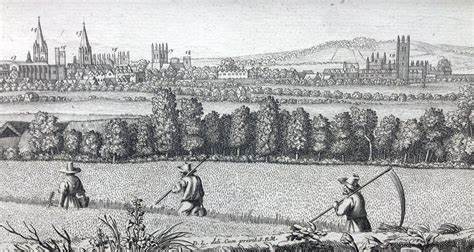
Various agricultural innovations drastically improved farm production and broke this cycle.  One fundamental change was the development of market-oriented agriculture. Landowners, mainly nobles, increasingly fenced off common lands to create land enclosures focused on growing cash crops for sale and export rather than local consumption. Governments, who sought noble support and tax revenues, supported these measures against peasant resistance – sometimes with armed forces.  This displaced peasants and many became wage earners on far or factories. 

Farmland enclosures

These cash crops created a greater demand for larger fields. Historian John Merriman writes, “Between 1750 and 1850 in Britain, 6 million acres – or one-fourth of the country’s cultivatable land – were incorporated into larger farms. (518)  The trend toward commercial agriculture was well on its way.

Farming Innovations: Crop Rotation and Animal Husbandry

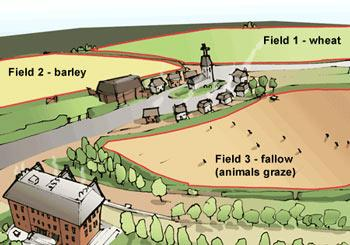
As farming became more commercialized, farmers became more specialized and adopted practices such as crop rotation.  Crop rotation differed from conventional agriculture, which saw farmers plant the same crop in the same place every year while leaving some fields fallow for two or three years to replenish their nutrients. Problems arose as these crops drew the same nutrients out of the soil, thus depleting it. Moreover, pests and diseases could establish themselves more readily.  Crop rotation addressed these problems.  Planting different crops sequentially on the same land optimizes soil nutrients and helps prevent pests and weed infestations. For instance, a farmer might plant corn one season and beans the next. 

Crop rotation

Healthy soil and healthy crops drastically improved food production.  Innovators like Robert Bakewell (1725-1795) improved animal husbandry, enhancing food supplies – particularly protein. 

Technological Advances

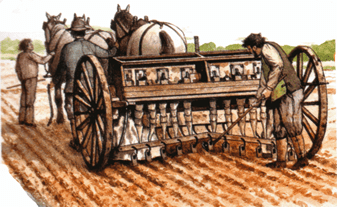
Technological advances also increased productivity. Farmer Jethro Tull (1674-1741) created the seed drill that planted seeds in deep soil, a drastic improvement over simply casting seeds on or near the surface where they would be more vulnerable to the elements or animals. Iron plows allowed farmers to turn the soil more deeply.

The seed drill.

Charles “Turnip” Townsend (1674-1738) learned how to cultivate sandy soil with fertilizer from the Dutch and expanded arable lands (Kagan 495).

More production and more food options.

Throughout the next century, these farming innovations meant fewer people could produce more food, and more food could be grown per acre.  Improved food production also created more varied and calorie-rich diets –fundamental contributors to population growth.  The potato and maize – two nutritious foods from the Americas played essential roles.  Imported from the Americas, the potato became especially widespread throughout Europe.  Donald Kagan writes, “On a single acre, a peasant family could grow enough potatoes for an entire year. (Kagan, 497).  These local developments were bolstered by what Alfred Crosby called the “Columbian Exchange” – the exchange of food, animals, and disease between Europe and the Americas—from this, Europe gained maize, potatoes, sweet potatoes, and cod.  Indentured servants and slaves – laboured to produce these essential foodstuffs. 

Overall, production rates soared. Merriman points out, “England produced almost three times more grain in the 1830s than the previous century.” (Merriman 518) Besides feeding more people, farms produced more fodder for livestock and helped create a more reliable milk and meat source. More livestock also meant more fertilizer (manure).  Fish like the cod harvested off Canada’s east coast offered another protein source. 

Nutrition, Sanitation and Disease

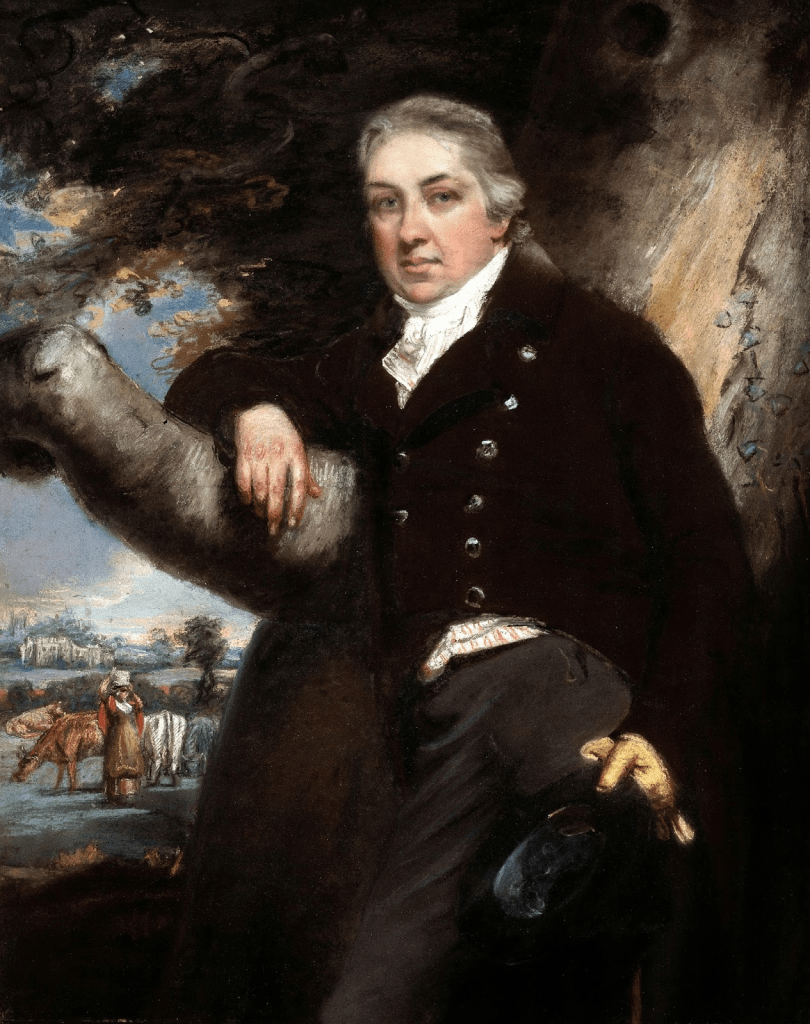
Better nutrition went hand in hand with improved disease prevention and treatment. Diseases like tuberculosis, influenza and dysentery still took many lives but conditions generally improved as cities gradually improved water supplies and waste management.  Medical practices only played a minor role until well into the 19th century. However, Edward Jenner’s vaccines for smallpox in the 1790s helped contain lethal outbreaks, and vaccinations would help stave off other diseases in the next century.  

Edward Jenner (1749-1823)

Rapid Population Growth

Over the eighteenth century the turn of the century, the population of England and Wales increased from about 5.5. million to approximately 10 million and 20.9 million by 1850.  (Cipolla, 29)   Growing numbers in urban centers like Manchester provided cheaper labour for factories to flourish.  Moreover, the combined factors of population growth and increased income per head led to more purchasing power and growing demand for products – – two essential factors for industrial growth.   

 Stay tuned for our next blog in our 7-part series on the origins of the Industrial Revolution in Britain.

Part 3: Access to Foreign Markets and Capital Investment

Britain and the Origins of the Industrial Revolution – Part 1.

The Industrial Revolution marks the most fundamental transformation of human life in the history of the human life in the history of the world recorded in human documents. Eric Hobsbawm

The mid-18th century to the first decade of the 20th century brought fundamental changes in people’s lives and thoughts.  During this time, Western Europe changed from a mainly agricultural region to an industrial one. These changes began in Britain and then spread to Western Europe and the U.S.  Russia, East Europe, and the Balkans came later.  The Industrial Revolution, as this period is called, is considered by many historians to be the most significant development in human history.  It involved, among other things, the creation of new technologies and economic systems as populations shifted from farms and villages to cities. Political systems, economic exchange, social relations, and warfare underwent drastic transformations.  New words like factory, railroad, middle class, capitalism, science, and engineers shaped how people saw themselves and their world (Winks 65).  How did this revolution begin, and how did it fundamentally change human life?  Why did it begin in Western Europe and, more particularly, Britain? 

In this 7-part series of blogs, we will examine the following:

Part 1: Introduction: Defining the Industrial Revolution

Part 2: Population Growth and Improved Food Production

Part 3: Access to Foreign Markets and Capital Investment

Part 4: A (Pre-mechanized Factory) Domestic Manufacturing Economy

Part 5: Technology, the Mechanization of Production and Alternative Sources of Energy (e.g. coal)

Part 6: Land and Water Transport

Part 7: The Textile Industry. 

Defining the “Industrial Revolution”

Scholars continue to debate various aspects of the Industrial Revolution. Even the chronology poses fundamental challenges.  Historian Lindeman writes that the Industrial Revolution offers “no easily identifiable beginning and no discernible end. (Lindeman, 44). Some scholars identify the beginning as the mid-eighteenth century.  Others, like R.C. Allen, go back to the 16th century. 

Considering the topic’s complexity, we need to define our terms.  “Industry” refers to the large-scale processing of raw materials and manufacturing goods in factories. “Revolution” is more problematic as it offers multiple meanings.  In one sense, revolution can be sudden, radical or change.  Historical examples include the French and American Revolutions that fomented sudden political and social change. However, “revolution” also refers to fundamental change. This might be political and socioeconomic change or ways of thinking, such as the Copernican revolution that revealed the Sun (rather than Earth) as the center of the universe or Darwin’s work on evolution.  Such events virtually pervade all aspects of human life, altering how we think and interact with the world.  This certainly applies to the Industrial Revolution.    

Although timelines are still debated, historians agree that the revolution was not sudden but occurred over a long period (150 years or longer), so they focus more on “revolution” as a fundamental change over time.  Donald Kagan writes that the Industrial Revolution “was revolutionary less in its speed, which was on the whole rate slow, than its implications for future of European society.” (Kagan 497) R.C. Allen writes that the Industrial Revolution “is no longer the abrupt discontinuity that its name suggests, for it was the result of an economic expansion that started in the sixteenth century.” (2). Accordingly, some scholars refer to an Industrial Evolution.

Of course, this extended period saw a profound change. The Industrial Revolution, Eric Hobsbawm points out, “was not merely an acceleration of economic growth, but an acceleration of growth because of, and through, economic and social transformation.” (13). The operative word here is transformation.   

What changed?

So, what was this “transformation” or “fundamental change?  One answer is that the Industrial Revolution altered a world ultimately dependent on the earth’s resources and organic means of production – dependencies that limited growth. Food production, for instance, involved people and animals toiling in fields, their productivity limited by land availability and technological limits.  Watermills used water flow but required proximity to a river.  Wind-propelled ships and windmills depended on the wind.  People burned wood to cook, heat homes, and metallurgy this but required access to trees – a rapidly dwindling European resource.  At the beginning of the 1700s, more than 90 percent of the European population lived in rural settings and engaged directly in animal husbandry and agricultural activities.” (MIII, 301) Few urban dwellers worked in factories. 

All of this would change – albeit gradually and in the beginning, only in particular parts of the world. Over time the focus on organic labour and agriculture shifted to alternative sources of energy -especially coal – and the factory-based and mechanized production of goods. (MIII,296) To better understand how this transformation happened, we must explore the preconditions that facilitated these changes. It all began in Britain.

So, this series of blogs will focus on the factors that led to Britain’s gradual transformation into the world’s first industrial nation.

Our next blog: Part 2 Population Growth and Improved Food Production

Bibliography

Allen, Robert. 1994. “Agriculture During the Industrial Revolution, 1700-1850.” In Roderick Floud and Donald N. McCloskey, eds., The Economic History of Britain Since 1700. 2d ed. Cambridge: Cambridge University Press, Vol. I. Ashton,

Allen, R. C. (1999). Tracking the Agricultural Revolution in England. The Economic History Review, 52(2), 209–235. https://doi.org/10.2307/2599937

Allen, R. C. “Why the Industrial Revolution Was British: Commerce, Induced Invention, and the Scientific Revolution.” The Economic History Review 64, no. 2 2011: 357–84. http://www.jstor.org/stable/41262428.

Cardwell, D.S.L. 1994. The Fontana History of Technology. London: Fontana. Crafts,

Cipolla, Carol M. The Fontana Economic History of Europe: Vol. 3, The Industrial Revolution. London: 1973.

Hobsbawm, Eric. Industry and Empire: The Birth of the Industrial Revolution. New York: The New Press, 1999.

Kagan, Donald.   The Western Heritage. Toronto: Pearson Education LTD., 2007.

Komlos, John. “Nutrition, Population Growth, and the Industrial Revolution in England.” Social Science History 14, no. 1 1990: 69–91. https://doi.org/10.2307/1171364.

Landis, David S. The Wealth and Poverty of Nations: Why Some are so Rich, and Some are so Poor. New York: W.W. Norton and Company, 1999.

Marks, Robert B. The Origins of the Modern World: A Global and Biological Narrative from the Fifteenth to the Twenty-first Century. Lanham, Maryland: Bowman and Littlefield Publishers, Inc. 

McCloskey, D. N. 198-. “The Industrial Revolution in Britain 1780- 1860: A Survey,” in Roderick Floud and Donald McCloskey, The Economic History of Britain since 1700.

Merriman, John. A History of Modern Europe: From the French Revolution to the Present. Volume Two. New York: W.W. Norton and Company, 2010. 

O’Brien, P. K. “Agriculture and the Industrial Revolution.” The Economic History Review 30, no. 1 1977: 166–81. https://doi.org/10.2307/2595506.

Osbourne, Roger. Iron, Steam, and Money: The Making of the Industrial Revolution. London: Random House, 2013.

Pelz, William A. “Becoming an Appendage to the Machine: The Revolution in Production.” In A People’s History of Modern Europe, 52–63. Pluto Press, 2016. http://www.jstor.org/stable/j.ctt1c2crfj.9.

Schellekens, Jona. “Nuptiality during the First Industrial Revolution in England: Explanations.” The Journal of Interdisciplinary History 27, no. 4 1997: 637–54. https://doi.org/10.2307/206538.

Vries, Peer. (2008). The Industrial Revolution. Pdf file downloaded

Winks, Robin and Joan Neuberger. Europe and the Making of Modernity, 1815-1914. New York: Oxford University Press, 2005. 

Eugenics: An Introduction

Eugenics. The science of improving the population by controlled breeding for desirable inherited traits. From the Greek eugenes, meaning well-born.

Animal Husbandry.  The science of breeding.

In 1883, Francis Galton, first cousin to Charles Darwin, coined “eugenics”, a pseudoscience that advocated controlled reproduction to ensure the healthy evolution of human societies.  Eugenics became increasingly popular in the early 20th century, solidifying racial hierarchies and categories of the unfit – criminals, the mentally ill, and the feebleminded.  Programs in various countries encouraged the “fit” to reproduce while discouraging the unfit through measures ranging from segregation to elimination.

Francis Galton (1822-1911) Francis Galton grew up in England and inherited a significant fortune after his father died.  His extensive travels to places like Africa reinforced his sense of a rigid hierarchy of human categories.  He was not alone in this thinking as racial and ethnic determinism pervaded Western thought during the 19th century.  Darwin’s publication of the Origin of Species (1859) further inspired Galton to pursue social betterment through selective breeding. Galton believed that humans evolved through the natural selection of inborn traits, and parents transmitted intellectual and moral qualities to their children. He acknowledged social factors but insisted that inherited talent (or lack of) persevered.  

Turn of the Century:  Eugenics takes off. Various factors played into eugenics growing popularity into the 20th century.  The “rediscovery” of Gregor Mendel’s claims of heredity as the dominant determinant in human life bolstered eugenic claims of biological determinism.  Visible signs of poverty, crime, and mental illness accompanied urban growth evoked concerns about societal “degeneration” – an oft-used term at the time.  As Diane B. Paul writes, “Middle-class people of every political persuasion – conservatives, liberals, and socialists, were alarmed by the apparent profligate breeding of what in Britain was called the “social residue.” (Paul, 235)

Alarmed by these developments and confident in their theories of selective reproduction, eugenics advocates began implementing practices to realize their visions.  Scholars have identified these practices as “positive” and “negative” eugenics. 

Positive Eugenics. Positive eugenics involved the promotion and practice of the selective breeding of the “fit.”  He pointed to the example of animal husbandry as a model to follow.  “If a twentieth part of the cost and pains,” he said, “were spent in measures for the improvement of the human race that is spent on the improvement of the breeding of horses and cattle, what a galaxy of geniuses might we create!  (Larson 180).

Negative Eugenics in Practice. The early focus on positive eugenics would give way to prohibitive measures in the twentieth century.  In the United States, Canada, and much of Northern Europe, as well as Britain, the central question was how best to discourage breeding by moral and mental defectives.” (Crook, 235)  The practice of eugenics ranged from segregation to extermination.  Practices also varied over time and from country to country.  Generally, the initial approach involved the segregation of male and female “defectives”. Some feared another option, sterilization, would promote images of extremism—however, institutional expenses coupled with improved sterilization technology made this alternative a more popular choice.  Accordingly, governments legalized the practice. Sterilization laws, for instance, had been passed in 30 American states and 3 Canadian provinces. (Paul, 236) 

Not surprisingly, the worst expression of eugenics occurred in Nazi Germany.  The Aktion T-4 programme and subsequent programs “euthanized” up to 200,000 of the country’s institutionalized mentally and physically disabled, some with the tacit consent of the families. (Paul, 236)  

Opposition.  Predicably, eugenics attracted virulent opposition from the Catholic Church, labour groups, liberal politicians, and scientific community members. The Catholic Church, already opposed to abortion and contraception, vehemently opposed sterilization. Labour groups spoke out against eugenics, knowing that many working and lower classes, especially immigrants, fell into eugenic categories of unfit.  Scientists readily challenged eugenic claims and the Mendelian foundation by highlighting the nurture side of the nature vs nurture debates of the time. 

Conclusion.  Blatant Nazi atrocities in the name of racial hygiene, coupled with scientific exposures of its falsities, undermined eugenic claims.  However, it did become one of the most influential and devastating of the broader social Darwinist movement.

This blog offers a rudimentary introduction to eugenics.  Future blogs will address more specific aspects of this topic.

Selected Bibliography

Cowan, Ruth Schwartz. Francis Galton and the Study of Heredity in the Nineteenth Century. New York: Garland, 1985.

Crook, Paul. Darwin’s Coat-Tails: Essays on Social Darwinism.  New York: Peter Lang Publishing Inc., 2007.

Larson, Edward J.  Evolution: The Remarkable History of a Scientific Theory.  New York: Modern Library, 2006. .

Paul, Diane B. “Darwin, Social Darwinism, and Eugenics.”  Jonathan Hodge and Gregory Radick eds.  The Cambridge Companion to Darwin.  New York: Cambridge University Press, 2009

Social Darwinism. An Introduction

 In 1859, Charles Darwin (1809-1882) published On the Origin of Species by Means of Natural Selection.  In it, Darwin convincingly argued that all species evolved by adapting through an ongoing struggle for survival.   The book is considered one of the most influential in the natural sciences.  However, Darwin’s influence would go well beyond the biological.  Shortly after the Origin of Species publication, people began speculating on the social implication of Darwin’s theories.  

“Social Darwinism,” a term for various social theories allegedly based on Darwin’s work, described individuals and societies competing for limited resources where the fittest survived and reproduced.  These theories provided intellectual fodder for racism, imperialism, militarism, political and economic conservatism, and misguided public health practices.   

What is Natural Selection?  In other blogs, we go into more detail about Darwin’s theories.  For now, here is a 5-point synopsis of natural selection.   

  1. More species exist than their environments can sustain.
  2. As a consequence of 1, all species are in a perpetual struggle for survival.
  3. Individual members of each possess variations or traits. 
  4. Those with favourable traits survive and reproduce, passing on these traits.
  5. Over generations, as traits pass, species evolve to survive in their environment—those who don’t perish.  

Origin of Species focused on plants and animals and did not address human evolution.  However, social theorists enthusiastically applied Darwinian biological concepts to human society, identifying societies as individuals competing in a struggle leading to the evolution and improvement of nations, classes, and races.

Adam Smith, Thomas Malthus, Herbert Spencer. The notion of competition between individuals and groups as inevitable and necessary predated Darwin and increasingly pervaded the 19th century.  Adam Smith advocated an economic model based on competition and minimal state intervention in his seminal work The Wealth of Nations (1776).  In his Essay on the Principle of Population (1798),Thomas Malthus, a clergyman, argued that people competed as populations outstripped limited resources – food, land, wealth.  Some, of course, would fall, but the strongest would survive. This competition, he insisted, led to social betterment, so state or private efforts to alleviate poverty were against nature.  Perhaps the strongest advocate of Social Darwinism was Herbert Spencer, who coined “survival of the fittest” in his Principles of Biology (1864).  The term helped bring attention to Darwin’s work and led to more applications to human society, including race, politics, economics, and medical practice like eugenics and euthanasia.

Politics, Social Inequality, Economics. Conservatives, concerned with the rising population of lower classes, cited natural selection as justification for refraining from poor relief in towns and cities.   Malthus and Spencer, two vehement individualists, insisted that poverty arose from flawed character and that state support for the poor contradicted the rules of nature and weakened society.  Similarly, industrialists like John D. Rockefeller and Andrew Carnegie justified low wages and laissez-faire business practices that exploited weakness.  In The Gospel of Wealth (1900), Carnegie applauded “the concentration of business, industrial, and commercial, in the hands of a few and the competition to the progress of the race.” (4)

Race and Imperialism.Jacque Barzun writes that “The 19C was the heyday of physical anthropology, which divided mankind into three or more races” and “taken for an exact science in spite of its conflicting statements.” (577). Social Darwinism offered “scientific” support for racial categories that hardened in the latter part of the 19th century. Theorists applied Social Darwinist principles to nations.  Nationalists and imperialists appealed to social Darwinism to explain and justify colonial control of inferior ethnic groups and races, offering a rationale for displacement, unfair laws and even genocide.  For example, British naturalist Alfred Russell Wallace supported European expansion at the expense of the “savage” and “inferior” indigenous peoples in the Americas and other continents.  Karl Pearson argued that the higher state of civilization arose racial struggle and the resulting survival of the physical and mentally fittest race. (Perry, 594)

An Infamous Legacy. Social Darwinism extended into the 20th century carrying its flawed reasoning and destructive implications with it.  Eugenics, founded by Darwin’s cousin Francis Galton, inspired the sterilization and euthanizing of people deemed “unfit” – the mentally ill, criminals, developmental delayed, and people of colour – in countries like Canada, the United States, and especially Germany.  Marvin Perry contends that “The Social Darwinist notion of the struggle of the races for survival became a core doctrine of the Nazi Party after World War 1 and provided the scientific and ethical justification for genocide.  (596). Social Darwinist theories began to wane by the middle of the 20th century, mainly as Nazi atrocities realized many of the morbid implications of Social Darwinist thinking, including sterilization and, of course, the Holocaust. 

Selected Bibliography

Barzun, Jacques.  From Dawn to Decadence, 1500 to the Present: 500 Years of Western Cultural Life.  New York: Harper Collins Publishers, 2000.

Carnegie, Andrew.  The Gospel of Wealth. New York: Century, 1900. 

Hofstader, Richard. Social Darwinism in American Thought. 1955.

Koch, H.W. ed.  The Origins of the First World War. New York: Taplinger, 1972. 

Olson, Richard, ed., Science as Metaphor.  Belmont, California: Wadsworth, 1971. 

Perry, Marvin. Ed. Western Civilization: Ideas, Politics, and Society. New York: Houghton Mifflin Company, 2000.

The Printing Press

William Manchester describes it as an “epochal invention” and “one of the great movements in the history of Western civilization. (95). “One of the most important technological innovations of Western civilization”, writes Jackson J. Spielvogel.   James McClellan and Harold Dorn write that this invention incited a “communications revolution” that  “altered the cultural landscape of early modern Europe.” (224)

 In 1453, craftsman Johannes Gutenberg (1398-1468) invented the printing press, which led to the mass production of printed works and incited massive change in Europe and the world.   How did Gutenberg achieve this?  What were some of the immediate and long-term effects of one of the most seminal inventions in human history? 

Before Gutenberg. For centuries, Europeans copied written works by hand, spending months transcribing works such as the Bible.  China, the inventors of paper, used more advanced copying technologies.  Printers began carving pages of text into woodblocks (woodblock printing) in the eighth or ninth century.  According to one Jesuit priest who lived in China in the late 16th century, this process could make 1500 copies per day – a much faster process than transcribing! (Headrick, 84).

Around 1045, Chinese inventor Phi Sheng created moveable (also known as interchangeable) type, using wax to attach individual ceramic characters to an iron frame. (Headrick 85)  Sheng’s invention allowed printers to rearrange symbols to create different texts. Woodblock printing, however, remained more practical, efficient, and cheaper than movable type printing. Chinese writing includes thousands of pictograph characters, which made arranging individual ceramic symbols an extremely time-consuming task. (143)

Movable-type, however, could be effective if applied to a writing system with a manageable number of symbols.

How did Gutenberg do it? Gutenberg allegedly created the printing press independent of Asian influence. There is some debate around this view.  We know, however, he used and modified recent inventions while adding his innovations.   Oil-based ink, already used to decorate textiles, offered a stable alternative for paper printing.  Gutenberg’s unique contribution is his development of moveable metal type.  He created steel signatures for each number, letter, and punctuation mark, then attached these symbols to a lead base and assembled them in a type tray. ( Parker, 580)  Next, he spread ink on the letters, lay a sheet of paper (or other material) over the letters, then used the press (adapted from the screw press used with wine presses and other applications) to impress the arranged symbols on the sheet. Symbols could be rearranged, reused and easily replaced, making for a relatively inexpensive process.  (Parker, 580) The twenty-six character Phoenician alphabet made movable-type more practical than the more elaborate Chinese lettering system. 

By modern standards, this seems like a tedious process.  Gutenberg, however, took a big step in mechanizing a process that enabled mass production of printed materials.  In doing so, he facilitated significant change in Europe and the world.     

Decentralizing Knowledge: The Spread of Ideas and Vernacular Languages. What were some of these changes? In practical terms, the printing press allowed people to mass-produce duplicate copies of written documents.  It offered a more accurate process than transcribing simple human errors.  Now, people could create identical copies of written materials such as pamphlets, posters, books, and sermons. 

Some lauded the invention as a victory for the spread of literacy and ideas.  Others feared it as a means of fomenting division.  The Holy Roman Empire, the overseer of a united Christendom, saw the rampant spread of printing as a threat to Christian unity.  As William Manchester points out, “Until late in the fifteenth century, most books and nearly all education had been controlled by the Church.” (Manchester, 95)   In part, this control entailed the exclusive use of Latin while discouraging and even outlawing vernacular languages such as German.  

The diffusion of knowledge, however, could not be controlled.  The production of printed material for the time is staggering.  By 1500 more than two hundred towns had print shops, and “almost 40,000 recorded editions of books had been published in 14 European languages, with Germany and Italy accounting for two-thirds. (Manchester, 92).  The Giolito Press in Italy, for instance, published numerous plays, poems and other works in Italian. 

These numbers increased exponentially in the following centuries.  Printing also made it easier to circulate ideas and opinions, including those that challenged traditional authority. Martin Luther’s famous 95 Theses (1521), criticizing the Catholic Churches sale of indulgences, were printed in German and widely circulated, driving the Protestant Revolution and Christian. 

Classical Literature and the Renaissance. Written works increasingly included a mix of religious and secular topics.  Gutenberg’s Bible sold well, as did Latin and Greek classics.  Printers noticed the growing appetite for classical works and strove to feed it.  Aldus Manutius, for instance, “set up the Aldine Press in Venice in 1495 to specialize in Greek, Latin, and early Italian classics.” (Parker 220) Aldus also published Greek dictionaries and grammar books. Historians identify an increasingly literate Europe with greater access to these classics leading to the classically inspired Renaissance.

Conclusion. Gutenberg’s printing press fostered a communications revolution that profoundly impacted Europe and the world.  More people learned to read and had greater access to a wider variety of ideas.  This diffusion of information – religious documents, philosophy, children’s books, science, classical texts – encouraged diversity while undermining the continent’s unity based on one language (Latin) and Catholicism’s pervasive belief system.  Printing also enabled papermaking, print shops, typefounding, publishing, writing, and other print-related industries.   

Gutenberg’s printing press certainly ranks among the top developments in the history of communications and, for some historians, it stands as one of the most outstanding achievements of all time. 

Selected Bibliography.

Cahill, Thomas.  Heretics and Heroes: How Renaissance Artists and Reformation Priests Created Our World.  New York: Anchor Books, 2014.

Headrick, Daniel R.  Technology: A World History.  New York: Oxford University Press, 2009

Manchester, William.  A World Lit Only By Fire: The Medieval Mind and the Renaissance.  New York: Little, Brown and Company, 1993.

McClellan, James and Dorn, Harold.  Science and Technology in World History: An Introduction.  Baltimore: Johns Hopkins University Press, 2015.  

Newman, Garfield.  Echoes from the Past: World History to the 16th Century. McGraw-Hill Ryerson Limited, 2001. 

Parker, Philip. World History: From the Ancient World to the Information Age. New York: Penguin Random House, 2017.

Spielvogel, Jackson J.  Western Civilization, Volume B: 1300-1815. Eight Edition. Boston: Wadsworth, 2012