Smallpox-The Global Killer


one of the scariest monsters on earth.” Dr. Michael Osterholm.

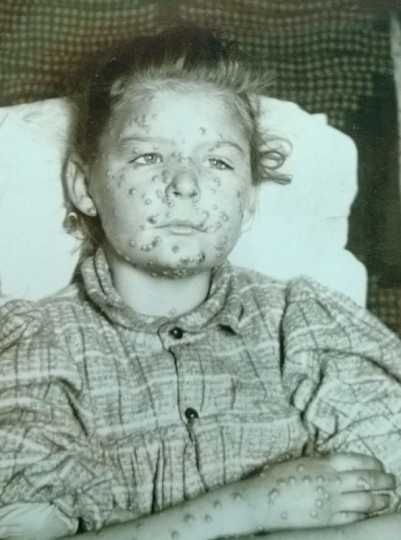
Smallpox, known by various names like “the speckled monster”, “the red plague”, “Hunpox”, and the “great pox”, was an undiscriminating killer of all races and classes. It might have killed Marcus Aurelius and almost finished Elizabeth I.  The Habsburg Emperor Joseph I died from the disease in 1711. Smallpox shaped migrations, influenced military outcomes and undermined governments. Over millennia, the disease spread worldwide and stood as one of the most formidable enemies of human existence, killing billions.

The quest to understand and combat smallpox had spanned centuries. In 1796, English physician Edward Jenner (1749-1823) achieved a historic breakthrough by creating the first vaccine. It was a milestone in the history of medicine but the disease lingered. Its continued impact into the 20th century is a stark reminder of the importance of eradicating such diseases.  1969, the World Health Organization (WHO) finally declared that smallpox was eradicated. 

What is Smallpox?                          

To fully appreciate the magnitude of this achievement, it is crucial to comprehend the nature of smallpox. We must understand its characteristics, its mode of transmission, and its impact on diverse populations worldwide.  Diseases happen when pathogens (the agents that cause disease) such as viruses, bacteria and fungi infect the tissue of a living being. Pathogens include viruses, bacteria, and fungi. They infect the tissue of living beings.  Symptoms occur when the pathogen releases toxins as they multiply, spread or even kill cells.  Diseases occur when pathogens infect the tissue of a living being.

Smallpox is a virus that is a parasite of animals, plants, and bacteria.  Some examples include the common cold, influenza, smallpox, AIDS, herpes, hepatitis, polio, and rabies. As parasites, viruses need a host to reproduce. They achieve this by infecting host cells and hijacking their machinery to survive and multiply. Outside of a host, viruses are inert. Contagious diseases can be passed between organisms (e.g. person to person) in various ways – direct contact (touch), indirect contact (with an infected object), and airborne (coughing, sneezing). When infection sets in, it sickens or even kills us.   

Like measles and whooping cough, smallpox is a so-called “crowd disease.” This term is used to describe diseases that spread rapidly in densely populated areas. They are particularly dangerous and difficult to control. This is due to their high transmission rates and potential for widespread outbreaks.    

Microscopic image of a virus

Smallpox is a Zoonotic disease. It is shared among people and sometimes between other animals like bats, monkeys, and livestock.  Smallpox infects humans but not other animals. Other zoonotic diseases include measles, HIV, AIDs, chicken pox, and SARS. Collectively, they are the deadliest diseases in human history.

Arguably the most lethal of the lot, smallpox is an influenza (flu)that scientists later discovered is caused by an Orthopoxvirus. (Snowden,87) The medical name for smallpox is variola virus. Virologists identify two kinds of smallpox. Variola major has a mortality rate of 25 to 30 percent. Variola minor has mild symptoms and a death rate of 1 percent or less. Variola major is the focus of this study.

What made smallpox so deadly?

Smallpox (variola major) has many dangerous traits, including its mode of infection and its adaptability to various climates. Regarding infection, it is highly contagious and transmitted mainly through droplets exhaled through coughing or sneezing. It can only be spread from human to human, not to other animals. The disease can also spread from the corpses of smallpox victims and contaminated items like linens.

Abetting its spread is that smallpox infects a host slowly with no immediate signs of illness. From the time of infection, the incubation period is nine to fourteen days. The infected experience symptoms such as fever, chills, headaches, and nausea. These symptoms could be confused with other ailments. Since symptoms do not appear for a week or two, people could unknowingly infect others for a week or two.  After incubation, the overt symptoms include lesioning and skin rashes.  Survivors could be blinded or permanently scarred. Some died. It ultimately kills by attacking the internal organs – the liver, lungs and heart.  Infants are the most vulnerable.  Survivors of smallpox did not become infected again, an essential trait that facilitated its eventual eradication. 

Smallpox also demonstrated a remarkable ability to survive in diverse climates. This includes the cooler temperatures of Northern Europe. This adaptability allowed smallpox to extend its reach far beyond the tropical regions where diseases like malaria thrived. Adaptability, contagiousness, and lethality made smallpox a pervasive and influential force in shaping human events. Its resilience, even in the face of diverse climates, underscores the gravity of this deadly disease’s impact on human history.

Smallpox and History

Scholars increasingly acknowledge the role of smallpox and other diseases in the unfolding of history.  In his 2019 book, Epidemics and Society: From the Black Death to the Present, Frank Snowden writes that diseases are “a major part of the ‘big picture’ of historical change.” They are crucial for understanding historical development. They include societal developments such as economic crises, wars, revolutions, and demographic change. (2)  Human history is littered with diseases like the plague, cholera, and the Spanish flu. Smallpox (variola major) is one of history’s most formative diseases and perhaps the deadliest.      

Origins  

Where did smallpox come from? Archaeological findings suggest smallpox and other diseases have a very long history. These diseases grew out of what sociologist Jonathan Kennedy calls “an epidemiological revolution.” This revolution followed hot on the heels of the Neolithic Revolution (c 10,000 to 8,000 BCE). This period saw some humans change from nomadic lifestyles to sedentary farm-based communities with more sustained interaction with domesticated animals.  (Kennedy, 43).  So, while we do not know the exact origins of smallpox, scholars have extrapolated its likely origins. Since it is a Zoonotic disease, closely related to cowpox found in animals like bovines and rodents, it likely grew out of the Neolithic period.

Early Cases. 

Even with today’s sophisticated archeological methods, it is difficult to determine the first cases of smallpox. The scant written records and rudimentary scientific knowledge of ancient peoples’ diseases mean that potential cases of smallpox could also be other diseases, such as measles, the bubonic plague or typhus.  Archeologists might have found evidence of instances of smallpox in ancient Egypt. Three mummies, including the young Pharoah Ramses V, who died in 1157 BC, were found with what looked like pockmarks. Written sources from Asia describe potential cases of smallpox in China (1122 BC) and India (1500 BC). Again, these are not definitive.

Smallpox and the Mediterranean

Whatever its specific origins, smallpox eventually spread throughout the world, enabled by denser populations and improvements in transportation technology that facilitated more human interactions through trade, migration and war.   Egypt, a potential source of smallpox, sits south of the Mediterranean Sea, a hub of interaction. As historian David Abulafia points out, “The sea routes of the Mediterranean have always provided a means for the transmission of pandemics,” like the Justinian plague in the sixth century AD and the Black Death in the fourteenth century AD. (144) 

Some scholars believe smallpox impacted the Peloponnesian War (431-404 BC), which saw Athens fight Sparta for regional supremacy.  In 430 BC, the Plague of Athens devastated that city, killing a quarter of the population over three years and severely weakening the Athenian war effort, thus facilitating Sparta’s victory. (Kennedy, 60). Other scholars have suggested measles or the bubonic plague. It is difficult to discern since contemporaries, as Abulafia points out, “saw these events as divine punishment rather than pathologies.” (144)  Thucydides is often cited for his observations of the Athenian plague but does not describe the disease symptoms in a manner that would verify it was smallpox. 

For some, smallpox is the prime suspect behind the Antonine Plague (164-165 AD) in the Roman Empire during the reign of Marcus Aurelius (161-180 CE). Fatality estimates vary but may have been in the millions. Historian Mark Thompson and others suggest that soldiers brought the disease back home after fighting in Mesopotamia. Contemporary Greek physician Galen described the symptoms as “diarrhea, high fever, and the appearance of pustules on the skin after nine days.” (Kerhaw 211).  By this time, the Roman Empire displayed vulnerabilities and epidemics such as the Antigone Plague, further weakening its resilience by disrupting the Roman economy, labour force, and army. 

More Reliable Accounts

We find more reliable accounts of smallpox and other diseases as written records improve.  However, only in the fourth century AD “can we find the first unmistakable description of smallpox in China. (Hopkins, 104).  There is some debate about how it initially entered China. Some argued that it first came from the Huns, a nomadic tribe to the north.  Hopkins, for instance, points to early accounts of what might be smallpox in China from around 250 BC and introduced by the Huns a few decades before the creation of the Great Wall. Some Chinese called it the “Hunpox” epidemic, reflecting their sense of its source. (Hopkins, 101) Again, the records are scant, so confirming that this “Hunpox” was smallpox is difficult. Other scholars challenge the “Hun origin” theory and suggest smallpox might have been introduced to China centuries later via India, along with the introduction of Buddhism around 65 AD. (Hopkins, 104). 

 Smallpox might have spread to the Korean peninsula around 48 AD. While Japan was separated from the mainland by water, the disease eventually reached the island country around 585 AD and wreaked havoc. Historian Charles Holcombe estimates that an epidemic in 735-737 AD may have killed a quarter of Japan’s population. (Holcombe, 118)

Smallpox became established as an “Old World Disease.” 

Smallpox eventually migrated throughout Europe, a continent significantly less densely populated and travelled than Asia, the Near East, and the Mediterranean until the early modern era. Historian Frank Snowden and other scholars suggest that the virus spread during the Crusades of the eleventh and twelfth centuries, as soldiers and pilgrims travelled back and forth between Europe and the Levant, the general area of what is now Israel, Lebanon, and Syria (97, Snowden). Over time, as European populations increased and interregional interactions became more frequent, smallpox and other diseases became endemic. 

Smallpox became endemic throughout most parts of Eurasia, or the “Old World.” Biologist Frank Fenner writes, “By 1000 AD, smallpox was probably endemic in the more densely populated Eurasian landmass from Japan to Spain and the African countries on the southern rim of the Mediterranean. (402).  By the 14th century, smallpox was established in Germany, Spain and France.  By the latter half of the 16th century, smallpox was endemic to Europe.

Smallpox, the “New World” and the Columbian Exchange

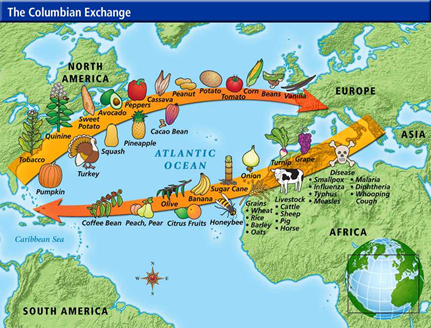
Smallpox finally made its way to the Americas in the sixteenth century.  Advances in navigation and shipbuilding and a growing appetite for trade with the faraway lands of India and China compelled European powers to seek reliable sea routes to these markets.  Christopher Columbus reached the Americas in 1492.  Later voyages and settlements led to what Alfred Crosby called the “Columbian Exchange,” the transatlantic transmission of technologies, foods, and diseases.  
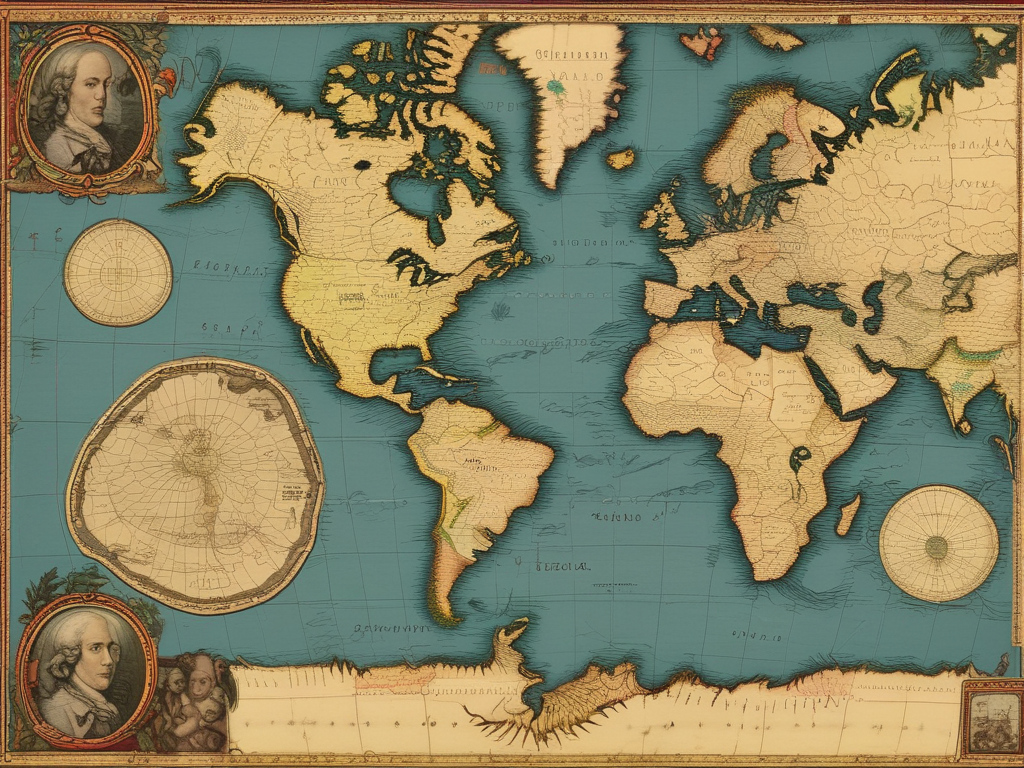
As part of this exchange, smallpox served as the primary biological culprit (other Old World diseases like measles contributed) in an epidemiological onslaught that would lead to the death of more than 90% of the indigenous population of the Americas (60.5 million in 1500 to 6 million a century later).

This demise facilitated the eventual European domination of the “New World. (Kennedy, 127).  Moreover, the decimation of the Indigenous population, coupled with malaria’s devastation of European settlers in the warmer parts of America, encouraged, from the late 17th century onwards, the import of African slaves who had developed more immunity and so provided a more secure labour force.  African slaves, travelling in tightly packed ships that served as incubators, also unwittingly spread smallpox and other diseases to the Americas.

Smallpox After 1600 AD

As the world became more interconnected through war, migration and trade, smallpox became endemic to many parts of the world and continued to impact human affairs. Snowden writes that in Europe during the 17th and 18th centuries, smallpox “replaced bubonic plague as the most feared of all killers.” (97). Most people became infected during their lifetimes. While indigenous people of the Americas suffered the worst devastations, Europeans still felt its deadly touch despite variolation and other mitigating factors, like improved public hygiene and better nutrition.  People were more likely to die from infectious diseases than today’s leading causes of death, cardiovascular disease and cancer. (Berman, 13)  Some estimates suggest smallpox caused a tenth of all European deaths during the 18th century and “a third of all deaths among children younger than ten.” (Snowden 98). It was also the continent’s leading cause of blindness. 

In Asia, smallpox shaped territorial competition and reduced local population numbers.  In 1759, China’s Qing dynasty defeated the Western Mongols.  Military prowess partially explains the outcome, but as historian Charles Holcombe writes, the Mongol’s demise might have been more from smallpox, “a disease to which Mongols were shockingly vulnerable.” (168, Holcombe).

As mentioned earlier, smallpox had wiped out a quarter of Japan’s population in 735-7 AD. Japan experienced many epidemics in the following centuries, particularly in its more densely populated regions. However, as populations spread to frontiers, so did smallpox. During the 19th century, the disease spread to Northern Japan, with Japanese settlers migrating to Hokkaido, drastically reducing the minority Ainu population. 

Smallpox also thrived in India.  Jayant Banthia and Tim Dyson note that “case fatality in India from smallpox was high – in the vicinity of 25-30 percent in unprotected populations, higher than recent estimates for eighteenth-century Europe.” (676)  

Edward Jenner and the First Vaccine (1796)

Edward Jenner created a smallpox vaccine (the first ever vaccine) in 1796, but it would take time to distribute globally.  In the meantime, smallpox continued to thrive.  The Franco-Prussian War triggered a smallpox pandemic of 1870–1875 that claimed 500,000 lives.  Vaccination was mandatory in the Prussian army, but many French soldiers were not vaccinated, so smallpox outbreaks among French prisoners of war spread to the German civilian population and other parts of Europe.

This public health disaster ultimately inspired stricter legislation in Germany and England, though not in France.   Smallpox continued to wreak havoc into the next century and “may have caused the death of as many as 300 million people in the 20th century alone. (Khan and Darwez,21)

Conclusion.

Dr. Michael Osterholm’s description of smallpox as “one of the scariest monsters on earth” is not hyperbole. The disease killed billions and caused immeasurable suffering.  Due to its adaptability and resilience, smallpox thrived on most continents.  Its demographic devastation, most notably in the Americas, profoundly impacted human history. 

It’s one weakness is that it can’t infect a person more than once, facilitating the effectiveness of vaccine treatment and the disease’s demise.  The history of smallpox and other diseases offers valuable lessons and insights.  We would be wise to heed them in a world with a growing population and greater interaction.

Bibliography

Alden, Dauril, and Joseph C. Miller. “Out of Africa: The Slave Trade and the Transmission of Smallpox to Brazil, 1560-1831.” The Journal of Interdisciplinary History 18, no. 2 (1987): 195–224. https://doi.org/10.2307/204281.

Banthia, Jayant, and Tim Dyson. “Smallpox in Nineteenth-Century India.” Population and Development Review 25, no. 4 (1999): 649–80. http://www.jstor.org/stable/172481.

Berman, Jonathan M. Anti-Vaxxers: How to Challenge a Misinformed Movement. Cambridge, Massachusetts, The MIT Press, 2020.

Chang, Chia-Feng. “Disease and Its Impact on Politics, Diplomacy, and the Military: The Case of Smallpox and the Manchus (1613–1795).” Journal of the History of Medicine and Allied Sciences 57, no. 2 (2002): 177–97. http://www.jstor.org/stable/24623679.

Fenner, Frank. “Smallpox: Emergence, Global Spread, and Eradication.” History and Philosophy of the Life Sciences 15, no. 3 (1993): 397–420. http://www.jstor.org/stable/23331731.

Fenner, Frank. “SMALLPOX IN SOUTHEAST ASIA.” Crossroads: An Interdisciplinary Journal of Southeast Asian Studies 3, no. 2/3 (1987): 34–48. http://www.jstor.org/stable/40860242.

Holcombe, Charles.  A History of East Asia: From the Origins of Civilization to the Twenty-First Century.  New York: Cambridge University Press, 2011.

Hopkin, Donald R. The Greatest Killer: Smallpox in History. Chicago: The University of Chicago Press, 2002.

AMALIE M. KASS. “Boston’s Historic Smallpox Epidemic:” Massachusetts Historical Review (MHR) 14 (2012): 1–51. https://doi.org/10.5224/masshistrevi.14.1.0001.

Kennedy, Jonathan. Pathogens: A History of the World in Eight Plagues. Toronto: Random House, 2023.

Kershaw, Stephen P. A Brief History of the Roman Empire: Rise and Fall.

Khan, Gazala, and Sazzad Parwez. “A Historical Narrative on Pandemic Patterns of Behavior and Belief.” Journal of Global Faultlines 9, no. 1 (2022): 21–32. https://www.jstor.org/stable/48676220.

Li, Yu, Darin S. Carroll, Shea N. Gardner, Matthew C. Walsh, Elizabeth A. Vitalis, and Inger K. Damon. “On the Origin of Smallpox: Correlating Variola Phylogenics with Historical Smallpox Records.” Proceedings of the National Academy of Sciences of the United States of America 104, no. 40 (2007): 15787–92. http://www.jstor.org/stable/25449217.

Manley, Jennifer. “Measles and Ancient Plagues: A Note on New Scientific Evidence.” The Classical World 107, no. 3 (2014): 393–97. http://www.jstor.org/stable/24699810.

Martin, Sean. A Short History of Disease: Plagues, Poxes and Civilizations.  Herts, UK: Pocket Essentials, 2015.

Mnookin, Seth.  The Panic Virus: A True Story of Medicine, Science, and Fear.  New York: Simon and Shuster, 2011.

Morens, David M., and Robert J. Littman. “Epidemiology of the Plague of Athens.” Transactions of the American Philological Association (1974-) 122 (1992): 271–304. https://doi.org/10.2307/284374.

Pas, Remco van de. “Epidemics in the Colonial Era.” Globalization Paradox and the Coronavirus Pandemic. Clingendael Institute, 2020. http://www.jstor.org/stable/resrep24671.6.

Osterholm, Michael T. and Mark Olshaker. Deadliest Enemy: Our War Against Killer Germs. New York: Little, Brown and Company, 2020.

Riley, James C. “Smallpox and American Indians Revisited.” Journal of the History of Medicine and Allied Sciences 65, no. 4 (2010): 445–77. http://www.jstor.org/stable/24631803.

Snowden, Frank M.  Epidemics and Society: From the Black Death to the Present, Yale University Press, 2018

Sohal, Sukhdev Singh. “Revisiting Smallpox Epidemic in Punjab (c. 1850 – c. 1901).” Social Scientist 43, no. 1/2 (2015): 61–76. http://www.jstor.org/stable/24372964.

Thein, MM, LG GOH, and KH Phua. “The Smallpox Story: From Variolation to Victory.” Asia Pacific Journal of Public Health 2, no. 3 (1988): 203–10. http://www.jstor.org/stable/26720502.

Thomson, Mark. “Junior Division Winner: The Migration of Smallpox and Its Indelible Footprint on Latin American History.” The History Teacher 32, no. 1 (1998): 117–31. https://doi.org/10.2307/494425.

Vögele, Jörg, Luisa Rittershaus, and Katharina Schuler. “Epidemics and Pandemics – the Historical Perspective. Introduction.” Historical Social Research / Historische Sozialforschung. Supplement, no. 33 (2021): 7–33. https://www.jstor.org/stable/27087273.

Warren, Christopher. “Could First Fleet Smallpox Infect Aborigines? – A Note.” Aboriginal History 31 (2007): 152–64. http://www.jstor.org/stable/24046734.
Britain and the Origins of the Industrial Revolution, Part 2: Population Growth and Improved Food Production

In Part 1 of our 7-part series on Britain and the origins of the Industrial Revolution, we introduced it as a time of gradual but fundamental change (transformation) in Britain from a dependency on organic resources and means of production to mechanized production using sources such as coal.  Along the way, Britain became more urbanized and expanded its markets domestically and internationally, becoming the world’s foremost power by the early to middle of the 19th century.  How did this happen?  What preconditions facilitated this transformation?   

Part 2 examines one of these preconditions: Improved Farming and Population Growth.

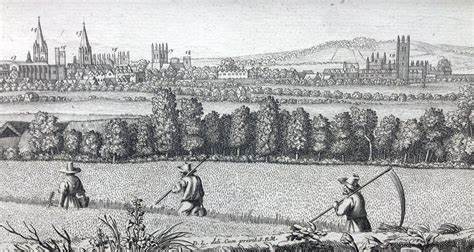
Improved farming and population growth provided essential preconditions for industrialization. Factory owners would need more people to grow their labour force and to buy their products.  More people required more food, and this growing demand hastened agricultural innovations that, in turn, facilitated population growth.  During the 17th century, farms gradually depended less on environmental whims and offered more predictable and productive yields.  Before these changes, people lived according to a traditional cycle of population and productivity.  When food production reached a limit based on available land and agricultural methods, the population reached a threshold, declined, and grew again until it reached production limits. This pattern stemmed from a system where agriculture involved subsistence for peasants and income for landlords and common lands were used for grazing livestock and fuel (e.g. wood).

Commercial Farming, Cash Crops and Enclosures

Various agricultural innovations drastically improved farm production and broke this cycle.  One fundamental change was the development of market-oriented agriculture. Landowners, mainly nobles, increasingly fenced off common lands to create land enclosures focused on growing cash crops for sale and export rather than local consumption. Governments, who sought noble support and tax revenues, supported these measures against peasant resistance – sometimes with armed forces.  This displaced peasants and many became wage earners on far or factories. 

Farmland enclosures

These cash crops created a greater demand for larger fields. Historian John Merriman writes, “Between 1750 and 1850 in Britain, 6 million acres – or one-fourth of the country’s cultivatable land – were incorporated into larger farms. (518)  The trend toward commercial agriculture was well on its way.

Farming Innovations: Crop Rotation and Animal Husbandry

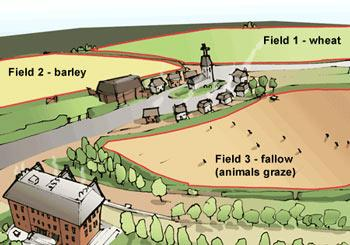
As farming became more commercialized, farmers became more specialized and adopted practices such as crop rotation.  Crop rotation differed from conventional agriculture, which saw farmers plant the same crop in the same place every year while leaving some fields fallow for two or three years to replenish their nutrients. Problems arose as these crops drew the same nutrients out of the soil, thus depleting it. Moreover, pests and diseases could establish themselves more readily.  Crop rotation addressed these problems.  Planting different crops sequentially on the same land optimizes soil nutrients and helps prevent pests and weed infestations. For instance, a farmer might plant corn one season and beans the next. 

Crop rotation

Healthy soil and healthy crops drastically improved food production.  Innovators like Robert Bakewell (1725-1795) improved animal husbandry, enhancing food supplies – particularly protein. 

Technological Advances

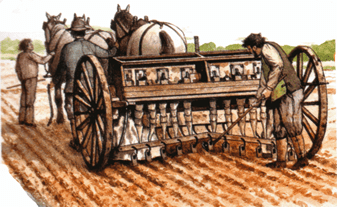
Technological advances also increased productivity. Farmer Jethro Tull (1674-1741) created the seed drill that planted seeds in deep soil, a drastic improvement over simply casting seeds on or near the surface where they would be more vulnerable to the elements or animals. Iron plows allowed farmers to turn the soil more deeply.

The seed drill.

Charles “Turnip” Townsend (1674-1738) learned how to cultivate sandy soil with fertilizer from the Dutch and expanded arable lands (Kagan 495).

More production and more food options.

Throughout the next century, these farming innovations meant fewer people could produce more food, and more food could be grown per acre.  Improved food production also created more varied and calorie-rich diets –fundamental contributors to population growth.  The potato and maize – two nutritious foods from the Americas played essential roles.  Imported from the Americas, the potato became especially widespread throughout Europe.  Donald Kagan writes, “On a single acre, a peasant family could grow enough potatoes for an entire year. (Kagan, 497).  These local developments were bolstered by what Alfred Crosby called the “Columbian Exchange” – the exchange of food, animals, and disease between Europe and the Americas—from this, Europe gained maize, potatoes, sweet potatoes, and cod.  Indentured servants and slaves – laboured to produce these essential foodstuffs. 

Overall, production rates soared. Merriman points out, “England produced almost three times more grain in the 1830s than the previous century.” (Merriman 518) Besides feeding more people, farms produced more fodder for livestock and helped create a more reliable milk and meat source. More livestock also meant more fertilizer (manure).  Fish like the cod harvested off Canada’s east coast offered another protein source. 

Nutrition, Sanitation and Disease

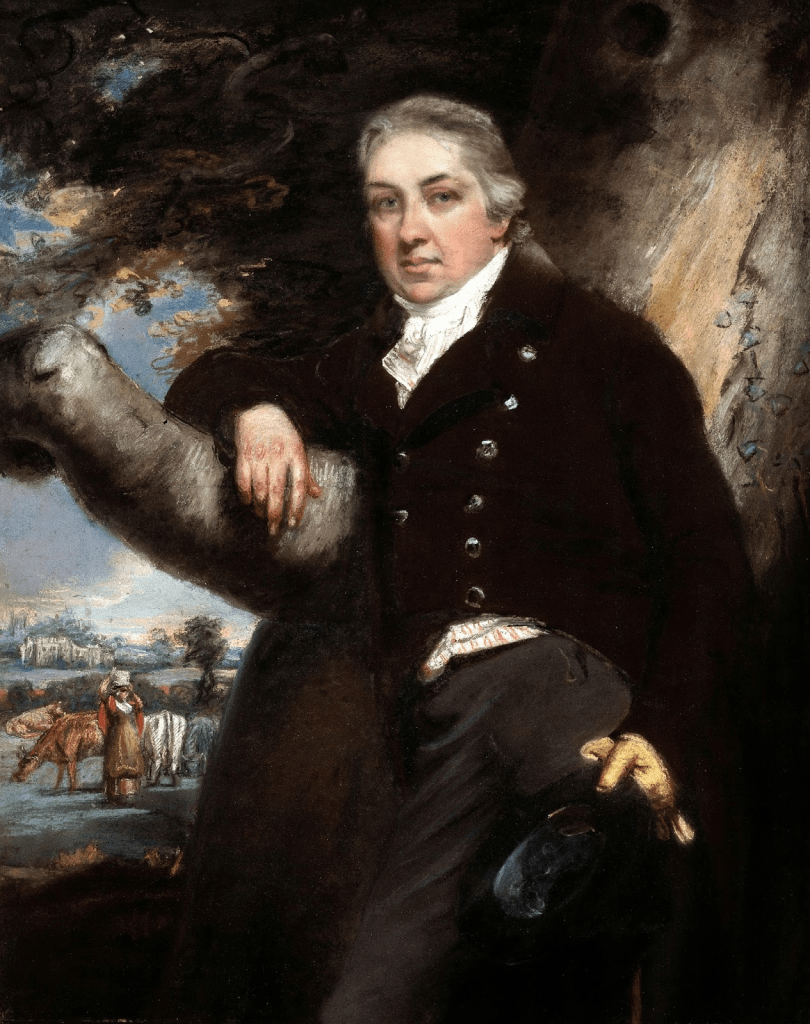
Better nutrition went hand in hand with improved disease prevention and treatment. Diseases like tuberculosis, influenza and dysentery still took many lives but conditions generally improved as cities gradually improved water supplies and waste management.  Medical practices only played a minor role until well into the 19th century. However, Edward Jenner’s vaccines for smallpox in the 1790s helped contain lethal outbreaks, and vaccinations would help stave off other diseases in the next century.  

Edward Jenner (1749-1823)

Rapid Population Growth

Over the eighteenth century the turn of the century, the population of England and Wales increased from about 5.5. million to approximately 10 million and 20.9 million by 1850.  (Cipolla, 29)   Growing numbers in urban centers like Manchester provided cheaper labour for factories to flourish.  Moreover, the combined factors of population growth and increased income per head led to more purchasing power and growing demand for products – – two essential factors for industrial growth.   

 Stay tuned for our next blog in our 7-part series on the origins of the Industrial Revolution in Britain.

Part 3: Access to Foreign Markets and Capital Investment

Britain and the Origins of the Industrial Revolution – Part 1.

The Industrial Revolution marks the most fundamental transformation of human life in the history of the human life in the history of the world recorded in human documents. Eric Hobsbawm

The mid-18th century to the first decade of the 20th century brought fundamental changes in people’s lives and thoughts.  During this time, Western Europe changed from a mainly agricultural region to an industrial one. These changes began in Britain and then spread to Western Europe and the U.S.  Russia, East Europe, and the Balkans came later.  The Industrial Revolution, as this period is called, is considered by many historians to be the most significant development in human history.  It involved, among other things, the creation of new technologies and economic systems as populations shifted from farms and villages to cities. Political systems, economic exchange, social relations, and warfare underwent drastic transformations.  New words like factory, railroad, middle class, capitalism, science, and engineers shaped how people saw themselves and their world (Winks 65).  How did this revolution begin, and how did it fundamentally change human life?  Why did it begin in Western Europe and, more particularly, Britain? 

In this 7-part series of blogs, we will examine the following:

Part 1: Introduction: Defining the Industrial Revolution

Part 2: Population Growth and Improved Food Production

Part 3: Access to Foreign Markets and Capital Investment

Part 4: A (Pre-mechanized Factory) Domestic Manufacturing Economy

Part 5: Technology, the Mechanization of Production and Alternative Sources of Energy (e.g. coal)

Part 6: Land and Water Transport

Part 7: The Textile Industry. 

Defining the “Industrial Revolution”

Scholars continue to debate various aspects of the Industrial Revolution. Even the chronology poses fundamental challenges.  Historian Lindeman writes that the Industrial Revolution offers “no easily identifiable beginning and no discernible end. (Lindeman, 44). Some scholars identify the beginning as the mid-eighteenth century.  Others, like R.C. Allen, go back to the 16th century. 

Considering the topic’s complexity, we need to define our terms.  “Industry” refers to the large-scale processing of raw materials and manufacturing goods in factories. “Revolution” is more problematic as it offers multiple meanings.  In one sense, revolution can be sudden, radical or change.  Historical examples include the French and American Revolutions that fomented sudden political and social change. However, “revolution” also refers to fundamental change. This might be political and socioeconomic change or ways of thinking, such as the Copernican revolution that revealed the Sun (rather than Earth) as the center of the universe or Darwin’s work on evolution.  Such events virtually pervade all aspects of human life, altering how we think and interact with the world.  This certainly applies to the Industrial Revolution.    

Although timelines are still debated, historians agree that the revolution was not sudden but occurred over a long period (150 years or longer), so they focus more on “revolution” as a fundamental change over time.  Donald Kagan writes that the Industrial Revolution “was revolutionary less in its speed, which was on the whole rate slow, than its implications for future of European society.” (Kagan 497) R.C. Allen writes that the Industrial Revolution “is no longer the abrupt discontinuity that its name suggests, for it was the result of an economic expansion that started in the sixteenth century.” (2). Accordingly, some scholars refer to an Industrial Evolution.

Of course, this extended period saw a profound change. The Industrial Revolution, Eric Hobsbawm points out, “was not merely an acceleration of economic growth, but an acceleration of growth because of, and through, economic and social transformation.” (13). The operative word here is transformation.   

What changed?

So, what was this “transformation” or “fundamental change?  One answer is that the Industrial Revolution altered a world ultimately dependent on the earth’s resources and organic means of production – dependencies that limited growth. Food production, for instance, involved people and animals toiling in fields, their productivity limited by land availability and technological limits.  Watermills used water flow but required proximity to a river.  Wind-propelled ships and windmills depended on the wind.  People burned wood to cook, heat homes, and metallurgy this but required access to trees – a rapidly dwindling European resource.  At the beginning of the 1700s, more than 90 percent of the European population lived in rural settings and engaged directly in animal husbandry and agricultural activities.” (MIII, 301) Few urban dwellers worked in factories. 

All of this would change – albeit gradually and in the beginning, only in particular parts of the world. Over time the focus on organic labour and agriculture shifted to alternative sources of energy -especially coal – and the factory-based and mechanized production of goods. (MIII,296) To better understand how this transformation happened, we must explore the preconditions that facilitated these changes. It all began in Britain.

So, this series of blogs will focus on the factors that led to Britain’s gradual transformation into the world’s first industrial nation.

Our next blog: Part 2 Population Growth and Improved Food Production

Bibliography

Allen, Robert. 1994. “Agriculture During the Industrial Revolution, 1700-1850.” In Roderick Floud and Donald N. McCloskey, eds., The Economic History of Britain Since 1700. 2d ed. Cambridge: Cambridge University Press, Vol. I. Ashton,

Allen, R. C. (1999). Tracking the Agricultural Revolution in England. The Economic History Review, 52(2), 209–235. https://doi.org/10.2307/2599937

Allen, R. C. “Why the Industrial Revolution Was British: Commerce, Induced Invention, and the Scientific Revolution.” The Economic History Review 64, no. 2 2011: 357–84. http://www.jstor.org/stable/41262428.

Cardwell, D.S.L. 1994. The Fontana History of Technology. London: Fontana. Crafts,

Cipolla, Carol M. The Fontana Economic History of Europe: Vol. 3, The Industrial Revolution. London: 1973.

Hobsbawm, Eric. Industry and Empire: The Birth of the Industrial Revolution. New York: The New Press, 1999.

Kagan, Donald.   The Western Heritage. Toronto: Pearson Education LTD., 2007.

Komlos, John. “Nutrition, Population Growth, and the Industrial Revolution in England.” Social Science History 14, no. 1 1990: 69–91. https://doi.org/10.2307/1171364.

Landis, David S. The Wealth and Poverty of Nations: Why Some are so Rich, and Some are so Poor. New York: W.W. Norton and Company, 1999.

Marks, Robert B. The Origins of the Modern World: A Global and Biological Narrative from the Fifteenth to the Twenty-first Century. Lanham, Maryland: Bowman and Littlefield Publishers, Inc. 

McCloskey, D. N. 198-. “The Industrial Revolution in Britain 1780- 1860: A Survey,” in Roderick Floud and Donald McCloskey, The Economic History of Britain since 1700.

Merriman, John. A History of Modern Europe: From the French Revolution to the Present. Volume Two. New York: W.W. Norton and Company, 2010. 

O’Brien, P. K. “Agriculture and the Industrial Revolution.” The Economic History Review 30, no. 1 1977: 166–81. https://doi.org/10.2307/2595506.

Osbourne, Roger. Iron, Steam, and Money: The Making of the Industrial Revolution. London: Random House, 2013.

Pelz, William A. “Becoming an Appendage to the Machine: The Revolution in Production.” In A People’s History of Modern Europe, 52–63. Pluto Press, 2016. http://www.jstor.org/stable/j.ctt1c2crfj.9.

Schellekens, Jona. “Nuptiality during the First Industrial Revolution in England: Explanations.” The Journal of Interdisciplinary History 27, no. 4 1997: 637–54. https://doi.org/10.2307/206538.

Vries, Peer. (2008). The Industrial Revolution. Pdf file downloaded

Winks, Robin and Joan Neuberger. Europe and the Making of Modernity, 1815-1914. New York: Oxford University Press, 2005. 

The Origins of American Slavery

In 1619 twenty Africans landed in Jamestown, Virginia, a budding British colony of the Americas focused on the growing and exporting of tobacco. Tobacco plantations required labour and until 1700, white indentured servants, mainly from Britain, provided most of the work. But various factors would lead plantation owners to replace indentured servitude with slavery and by the American Revolution (1776), all the British colonies practiced permanent chattel slavery. How and why did this transition happen? 

Colonial Plantations and Labour. Historian Peter Kolchin writes, “Almost from the beginning, America was heavily dependent on coerced labour… (3) Before slavery, British colonists utilized two other sources of unfree labour – Native American slavery and Indentured Servants. Native American slavery comprised a relatively small portion of colonial workers. Historians point to various reasons for this. First, diseases had severely decimated the Native American population since Europeans arrived in the late 1400s. Estimates vary, but there is a growing consensus that between 70 and 90 percent of indigenous Americans (North, Central and South America) died from European-borne diseases such as smallpox and measles. A decimated population could not meet growing plantation labour demands.   Also, familiar with local environments, Native Americans could escape, survive, and rejoin their communities.  

Indentured Servitude. Indentured servitude provided a better option and became the primary source of unfree labour during the 17th century. The arrangement ostensibly met the needs of both the servant and plantation owner. Indentured servants often left England to escape poverty, persecution and political instability. Without resources to traverse the Atlantic, they “sold themselves into temporary slavery in exchange for free transatlantic transportation… (Kolkin, 8). A steady supply of indentured servants pre-empted the need to seek alternative sources of labour – including slavery. As Kolkin writes,

so long as a ready supply of indentured labor continued to exist, colonists saw little reason to go to the expense of importing large numbers of Africans, who, unlike English labourers, had to undergo prolonged adjustment to alien conditions – strange masters had unusual customs, spoke an unintelligible language before becoming productive members of the workforce. (11)

Various factors made slavery less viable during most of the 17th century. Slavery at this time involved more risk and expense. Especially during the early 17th century, plantation labourer life expectancy was low. James Oakes estimates that “90% of those who migrated to the Chesapeake in the seventeenth century came as servants, and half died before completing the term of service.” (68). Plantation working conditions were brutal, and workers had less protection than in England. As Oakes points out, “As long as life expectancy was low, it was generally more profitable for a planter to purchase an indentured servant for seven years than a slave for life.” (10) Also, the immense crossing distance from Africa to North America – much further than Africa to Brazil, for instance) led to high slave fatalities and reduced profitability. 

The Transition to Slavery.  An interplay of factors encouraged the transition from indentured servitude to slavery. First, colonial demand for labour began outpacing the labour supply of indentured servants. Virginia’s growing tobacco plantations required more work, and from the 1690s, Carolina evolved into a significant producer and exporter of labour-intensive crops, rice and indigo. (Black,88) Carolina planters would benefit from enslaved Africans already well-versed in rice production. 

Factors on the supply side also encouraged the transition to slavery. Kolchin points out that “at the same time that colonial demand for labor was surging, a sharp decrease occurred in the number of English migrants arriving in America under indenture.” (11) Various factors contributed to this decrease. The monarchy’s restoration in England facilitated “both political stabilization and an economic upturn” that encouraged labourers to stay in Europe. (Kolchin, 12). Also, less arduous opportunities in American colonies like New York and Pennsylvania attracted immigrants, effectively siphoning potential plantation labourers.  

Essentially, the indentured labour supply could not keep up with the growing demand for labour. Slavery became an increasingly viable choice. 

Slavery Becomes More Viable.  Various factors mitigated the high initial costs of slavery for wealthy planters who benefitted from slavery as a long-term investment. In the 1680s, England’s Royal African Company broke the Dutch monopoly on the slave trade, significantly reducing the cost of slave transport. Also, enslaved Africans proved very capable and resilient. Many had engaged in agricultural labour and, unlike Native Americans, had been exposed to European diseases, developing immune systems more adept to colonial life. 

Unlike indentured servants, Africans remained slaves for life. In 1662, Virginia made slavery a hereditary condition by declaring that “all children born in this country shall be held bond or free according to the conditions of the mother.” (Berkin, 70) In other words, permanent slave status passed from the mother to her children. This law drastically favoured plantation owners. As Kolchin writes, “…whereas in the seventeenth century the slave population failed to reproduce itself and had to be replenished in much the same way the servant population did, in the eighteenth century, it became a self-perpetuating labor force.” (13)

Native Americans and English indentured servants also presented higher flight risks from the brutal conditions of plantation labour. European indentured servants could leave and readily blend into other communities. Native Americans often knew the environment and could escape and even return to their people. On the other hand, enslaved Africans landed in a foreign setting that offered no friendly escape destinations. Moreover, due to skin colour, Africans fleeing a plantation were more visible and less able to blend into free communities. As Kolchin writes, “Racial distinction, in short, facilitated enslavement. (13).

Slave Codes. Plantation owners also benefitted from slave codes. As Carol Berkin points out, the “legal difference between black and white servants was vague until the 1660s. As previously mentioned, in 1662, Virginia legislated that all children of slave mothers inherited her slave status. Other colonies followed suit. Slave codes legally entrenched racial differences while imposing various restrictions such as banning enslaved people from holding meetings, owning property, getting married, possessing guns or inflammatory literature. 

Conclusion. The transition to slavery happened relatively quickly – less than one hundred years. The estimates vary, but according to James Oakes, the number of African or African-descended inhabitants of the mainland colonies” increased from 2920 in 1660 to more than 300, 000 a century later. (126).  By this time slavery had become the labour system of the Southern colonies and was legally recognized in the Northern colonies.  

Slavery had been firmly entrenched in American society by the middle of the 18th century.    

Bibliography.

Berkin, Carol. Making America. A History of the United States. Boston: Houghton Mifflin Company, 2001. 

Black, Jeremy. A Brief History of Slavery: A New Global History. London: Constable and Robinson, 2011.

Foner, Eric. Give Me Liberty: An American History. Volume 1. New York: W.W. Norton and Company, 2017

Hine, Darlene and William C. Hine.  African Americans: A Concise History. New Jersey: Pearson Education, Inc. 2014.

Kolchin, Peter. American Slavery. 1619-1877.  New York: Hill and Wang, 1993.

Oakes, James. Of the People. A History of the United States. Volume 1: To 1877. New York: Oxford University Press, 2017.