Welcome to our HLA blog! We explore various topics based on chronology, geography, subject and courses.
Chronology. Historical periods from Pre-History to the Present – e.g. Classical, Middle Ages, Renaissance.
Geography. China, Europe, Canada, and the United States comprise some of the geographically-based content.
Topic. These include blogs devoted to war, revolutions, political, gender and other issues listed accordingly.
Courses. Blogs related to world history and other programs. Look for tips around essay writing, research and much more.
Some history topics are very challenging! We aim to explain these topics in an accessible manner that clarifies without compromising the subjects’ complexities. Complex issues, we believe, can be accessible with patient explanation and quality writing.
Lastly, we encourage your input. If there are topics you would like us to write about, please feel welcome to contact us.
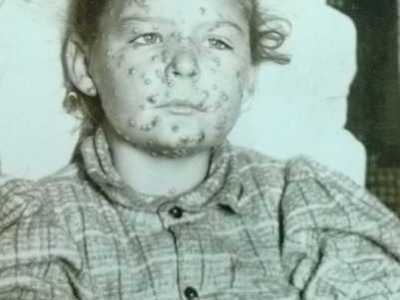
Smallpox-The Global Killer
“one of the scariest monsters on earth.” Dr. Michael Osterholm. Smallpox, known by various names like “the speckled monster”, “the red plague”, “Hunpox”, and the “great pox”, was an undiscriminating killer of all races and classes. It might have killed Marcus Aurelius and almost finished Elizabeth I. The Habsburg Emperor Joseph I died from…
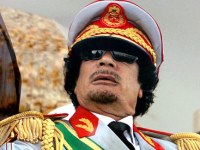
What is Authoritarianism?
Concepts have histories. They appear at specific times, change meanings at times, and disappear sometimes. Adam Przewarski For a political system that affects the lives of so many, authoritarianism remains a surprisingly fuzzy concept. Ruth Ben-Ghiat In the introduction to our series on authoritarian tactics, we noted how a significant increase in global authoritarianism…
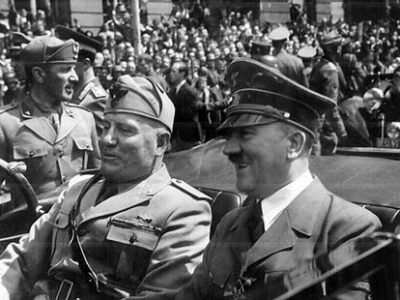
Authoritarian Practices: Introduction
We do not argue with those who disagree with us, we destroy them. Benito Mussolini A growing number of astute political observers cite a global trend of authoritarianism since 1990. Countries like Russia, Turkey, India, Hungary and even the United States erode or effectively abolish democratic institutions and freedoms. These observers – mainly scholars and…
Britain and the Origins of the Industrial Revolution, Part 2: Population Growth and Improved Food Production
In Part 1 of our 7-part series on Britain and the origins of the Industrial Revolution, we introduced it as a time of gradual but fundamental change (transformation) in Britain from a dependency on organic resources and means of production to mechanized production using sources such as coal. Along the way, Britain became more urbanized…
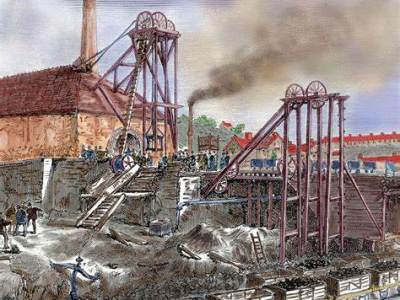
Britain and the Origins of the Industrial Revolution – Part 1.
The Industrial Revolution marks the most fundamental transformation of human life in the history of the human life in the history of the world recorded in human documents. Eric Hobsbawm The mid-18th century to the first decade of the 20th century brought fundamental changes in people’s lives and thoughts. During this time, Western Europe changed…
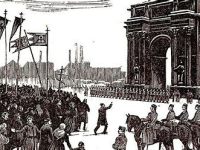
Russia 1905: A Dress Rehearsal for 1917
The beginning of the twentieth century forever changed the course of Russian history. Two revolutions occurred in Russia in 1917 – the February and October Revolutions. The February Revolution toppled Tsar Nicholas II’s Russian monarchy and created a liberal-socialist Provisional government. In October, Vladimir Lenin and the Bolshevik Party seized power and ushered in decades…
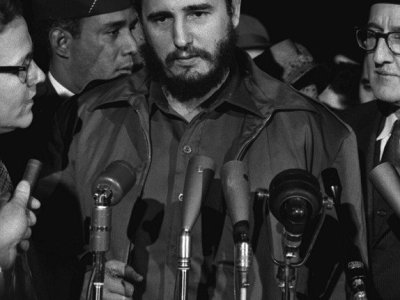
The Bay of Pigs Invasion (1961)
In April 1961, an American-sponsored contingent of 1500 Cuban exiles landed at the Bay of Pigs, intent on overthrowing Cuban leader Fidel Castro. The attempt failed miserably. Most invaders were captured and imprisoned. The invasion further undermined U.S.-Cuban relations and heightened Cold War tensions, particularly Soviet-American relations. It also stands as a conspicuous blemish on…
The Origins of American Slavery
In 1619 twenty Africans landed in Jamestown, Virginia, a budding British colony of the Americas focused on the growing and exporting of tobacco. Tobacco plantations required labour and until 1700, white indentured servants, mainly from Britain, provided most of the work. But various factors would lead plantation owners to replace indentured servitude with slavery and…
Origins of Monotheism and World History
World History devotes much attention to the world’s belief systems and religions that shaped our past. One integral theme is the development and impact of monotheist religions, particularly the “Abrahamic traditions” -Judaism, Christianity, and Islam. Polytheism (multiple gods) preceded these “One-God” religions that eventually came to predominance in much of the world. Historians, anthropologists, and…

China’s Cultural Revolution (1966-1976)
From 1966 to 1976, Communist leader Mao Zedong led a “Great Proletarian Cultural Revolution” that renewed the Chinese Revolution that Mao felt had lost its way. Mao and his followers drastically altered the country’s political, economic, and social structure. Historian Paul Clark calls it “the biggest non-wartime, concentrated social upheaval in world history. (1). Rhoads…
Something went wrong. Please refresh the page and/or try again.
Follow My Blog
Get new content delivered directly to your inbox.
 History Learning Academy