Oceans, Seas, and World History: An Introduction

Oceans and seas make up about two-thirds of our planet, yet historical attention to such bodies has been minimal at best. Rainer F. Buschman.

With the rise of world history, more people view the past through a lens that brings a broader range of global interconnections to light. Essential to these linkages are geographical features such as waterways (oceans, seas, and rivers) and landforms (e.g. mountains, deserts, and forests) that help shape the formations of societies and their interactions and exchanges, including trade, culture, flora and fauna, and disease. Understanding these geographical features is critical to understanding our past.  

Traditional world history tends to be “terrestrial-focused,” but this is changing as historians display an increasing tendency to study the world’s waterways. Maritime history enriches our understanding by highlighting world history trends and patterns in unique ways. As Eric Kjellgren writes, “favorable prevailing winds and fish suddenly seem as influential as access to fresh water and arable land. Shipbuilding and skillful navigation challenge the prominence of building roads and canals. (1)  World history returns the favour by encouraging maritime history into a global approach that moves away from seeing oceans as barriers to human interaction to conceiving them as important interconnected regions. In short, a blending of maritime and world history can lead to more sophisticated understandings.  

Oceans. It would be a severe understatement to say that the world’s oceans and seas that comprise about two-thirds of the planet play an essential role in unfolding world history. Oceans and seas facilitated the migration of people, animals, flora, disease, culture and technologies. As maritime historian Lincoln Paine writes, “Before the locomotive in the nineteenth century, culture, commerce, contagion, and conflict generally moved faster by sea than by land. Besides transport, people used oceans and seas to provide food and other vital goods. Whale blubber, for instance, served as lamp fuel, lighting a growing world population. Waterways have imbued culture. Poseidon and Neptune, Moby Dick, the Ancient Mariner, various folk songs, and countless varieties of seafood reveal how waterways help shape the world’s cultures.

Beyond a Eurocentric Focus. World history encourages maritime history to move beyond a Eurocentric approach. As S. Arasaratnam points out, world history fosters a move “away from a view of the ocean as primarily the playground of European naval and commercial powers with indigenous actors providing minor roles for the lead up to the period of empire in the nineteenth century. (246)  Of course, studying the European powers remains vital to our understanding of the unfolding of global history. How, for instance, could we understand the monumental developments in the Atlantic community without carefully studying its most impactful player – Europe? But an exclusive focus on these players can limit our understanding. David Abulafin argues that “the European presence around the shores of the oceans can only be understood by taking into account the less well-documented activities of non-European merchants and sailors, some of whom were indigenous to land in which they lived.” (xx) For instance, the “Silk Road of the Sea” that connected people as far as China and the Roman Empire involved a blended relay of major powers such as Rome and China with more local merchants indigenous to the shores of the Pacific and Indian oceans. 

Conclusion. As Lincoln Paine writes, “maritime history offers an invaluable perspective on the world and ourselves. (599). Waterways such as the world’s oceans, seas, and rivers are integral to our past. Interestingly, recent historiography has questioned whether we can consider the oceans as separate entities. As David Armitage writes, “the oceanographic connections among the oceans ensure that any attempt to separate them will be artificial and constraining.” (359). This is particularly true after developments such as da Gama’s navigation around the Cape of Good Hope, and later, the Suez and Panama canals connected major bodies of water. 

We are writing four upcoming blogs, each focusing on one of the world’s four oceans – the Pacific, Indian, Atlantic, and the Arctic. The first focuses on the world’s largest, the Pacific, but will include its relationship to other bodies of water, including the Indian Ocean. These blogs will reflect the fruitful mingling of maritime and world history that highlights regional and global connections.  

Stay tuned. 

Bibliography

Abulafin, David. The Boundless Sea: A Human History of the Ocean. London: Oxford University Press, 2019.

Arasaratnam, S. “Recent Trends in the Historiography of the Indian Ocean, 1500 to 1800.” Journal of World History 1, no. 2    (1990): 225–48.                            

Armitage, D. (2019). World History as Oceanic History: Beyond Braudel. The Historical Review/La Revue Historique, 15(1), 341-361.

Ashin Das Gupta and M.N. Pearson eds. India and the Indian Ocean 1500 to 1800. New Dehli, 1987.

Bailyn, Bernard. Atlantic History: Concepts and Contours. Cambridge, Mass, 2005.

Benjamin, Thomas. The Atlantic World: Europeans, Africans, and Their Shared History, 1400-1900. Cambridge University Press, 2009. 

Buschman, Rainer F. “Oceans of World History: Delineating Aquacentric Notions in the Global Past.” History Compass 2 (2004) WO o68, 1-10. 

Crosby, Alfred. The Columbine Exchange: Biological and Cultural Consequences of 1492. Westpoint; Conn, 1973.

Duiker, William J. Twentieth Century World History. Belmont, CA: Thomson Wadsworth, 2007.

Martin J. Peggy, Beth Bartolini-Salimbini, Wendy Peterson. 5 Steps to a 5: AP World History 2019. McGraw-Hill Education, 2018

Mukherjee, Rita. “Escape from Terracentrism: Writing a Water History,” Indian Historical Review 41 (2014), 87-101.

Paine, Lincoln. The Sea and Civilization: A Maritime History of the World. New York: Alfred A. Knopf, 2013.


Cleopatra VII

Cleopatra VII (69- 30 BC) ruled Egypt for twenty-two years and is one of the most recognizable figures in world history. Numerous movies, articles and books explore her life and legacy. Yet, we know very little about her. Contemporary accounts of her life, many from Roman officials who despised her, offer less than reliable information. She is primarily known as Egypt’s last Queen and the lover of two powerful and famous Roman leaders – Julius Caesar and Marc Antony. These liaisons and her dramatic death – alleged suicide by snake bit – tend to overshadow a woman who displayed competent leadership, extraordinary intelligence, bravery, and resolve. 

Early Years. Born in 69 BC, Cleopatra hailed from a long line of the Ptolemaic dynasty that began when Ptolemy I of Macedonia took control of Egypt shortly after the death of his friend and leader – Alexander the Great. (d. 323 BC)The legitimacy of the Ptolemaic line would rely, to a large degree, on this link to Ptolemy I.

Egyptian women (especially royal women) enjoyed high status relative to other countries. Women were educated, held property, and could initiate divorces. Cleopatra, as biographer Stacy Schiff points out, “enjoyed the best education available in the Hellenistic world” (28). She studied literary greats, especially Homer, math and science, and rhetoric and public speaking. An avid learner, Cleopatra spoke many languages, including Egyptian, which allowed her to converse directly with her people. Perhaps the only Ptolemaic leader to do so.

Sibling Rivalry. Cleopatra’s father, Ptolemy XII (117-51 BC), ruled Egypt until his death from natural causes in 51 BC. The Ptolemy tradition promoted domestic unions, so Cleopatra (age 18) and her younger brother Ptolemy XIII (age 10) wed and succeeded their father. Domestic competition for power pervaded a Ptolemaic history littered with betrayal and murder. Soon after their father’s death, the ruling siblings fell into conflict. Both signed documents without the signature of the other and conspired with advisors to out the other. Buoyed by influential advisors led by the cunning Pothinus, Ptolemy XIII got the upper hand, and Cleopatra left Alexandria (or was exiled) in 49 BC. Now recognized by the Ptolemaic court as “leading dynast,” Ptolemy had the upper hand. However, events to the west would offer Cleopatra a political opportunity.

The Encroaching Shadow of Rome. By this time, the Republic of Rome had taken significant steps toward becoming a great empire, steadily extending its territory and influence.   Egypt, acutely aware of Roman ambitions, knew the budding empire required careful diplomacy. Allying with influential Roman leaders became essential for Egyptian survival. Cleopatra’s father, Ptolemy, paid a vast amount to retain status as a friend and ally of the Roman people. As biographer Stacy Schiff writes, “it was essential to befriend the most powerful Roman of the day.” (3)  

Not an easy task with Rome embroiled in a civil war between rival factions that threatened to tear the budding empire apart. Two Roman leaders, Pompey (106-48 BC) and Julius Caesar (100-44 BC) fought for competing visions of Rome. Both Romans had ties to Egypt. Caesar recognized Cleopatra’s father as a friend to Rome and loaned the Egyptian king a considerable and still outstanding sum of money. However, Ptolemy XIII decided on Pompey, the Ptolemy family’s longstanding benefactor and provided him with ships, wheat and other provisions in exchange for Pompey recognizing Ptolemy as sole ruler of Egypt. It seemed that a Pompey victory would guarantee Cleopatra’s permanent exile or execution. 

Julius Caesar arrives in Alexandria. But Caesar prevailed. In 48 BC, he defeated Pompey, who fled to Egypt seeking refuge. Not wanting to offend the victorious Caesar, Ptolemy VIII watched as his men killed Pompey, beheaded him, and presented Caesar with the gory proof of Ptolemaic loyalty. The gesture failed. Caesar backed Cleopatra after she smuggled herself into Alexandria and his temporary quarters. Why? Caesar could have readily turned Cleopatra over to her brother. The answer lies far beyond the simple and sexist versions that insist Cleopatra seduced him. There were more significant issues at hand. Perhaps, as some suggest, Caesar did not want to associate the murderer of Pompey, a respected Roman leader. Historian Barry Strauss believes Caesar resented Ptolemy for robbing him of Ptolemy’s surrender and refusing to pay Caesar’s troops. “Sound political reasoning,” Strauss argues, led Caesar to the more politically vulnerable Cleopatra, who offered financial backing in exchange for supporting her claim to the throne. (Strauss, 35) 

Coveting a stable Egypt, Caesar demanded that brother and sister reconcile as co-regents as stated in their father’s will. Ptolemy XIII initially complied but soon resisted and died in the ensuing skirmishes in Alexandria. In 46 BC, buoyed by Caesar’s support, Cleopatra secured Rome’s recognition as an allied monarch, helping to solidify her rule. (Roller 4)

A Capable Leader. To appease public opinion, Cleopatra married her remaining brother, Ptolemy XIV. With Caesar’s backing, they set about stabilizing Ptolemaic rule. Some critics note how Cleopatra invited spectacle. She identified – at least publicly – as a deity, often Isis, goddess of fertility, and in Ptolemaic tradition, styled herself as Egyptian royalty. But these efforts promoted her legitimacy in the public eye – a vital sign of stability during unstable times.

Cleopatra offered much more than pageantry. As Stacey Schiff writes, Cleopatra was a “capable, clear-eyed sovereign. She knew how to build a fleet, suppress an insurrection, control a currency, and alleviate famine. (2)  For instance, when faced with longstanding drought and famine through much of the 40s, Cleopatra distributed grain from the royal warehouses. Besides staving off starvation, she offered political security associated with the longstanding Ptolemaic dynasty. Roman politics, however, would again test Cleopatra’s resolve and political skill.   

Fall of Julius Caesar. Within a year of meeting Caesar, Cleopatra bore a son, claiming him as father and naming him Ptolemy XV Caesarion (b. 47 BC). By most accounts, Romans did not approve of Caesar’s relationship with a foreign woman, especially a wealthy and influential Queen. Their association, some scholars suggest, contributed to his demise. However, the overarching issue was a growing senatorial concern that Caesar had become a dictator and a threat to the Republic. 

Julius Caesar died in 44BC during one of history’s most famous assassinations. The implications for Cleopatra and Egypt were dire. Caesar stood as a powerful ally who could protect Egypt from annexation. In Rome at the time of the assassination, Cleopatra left after failing to secure Roman recognition of Caesarion as Julius Caesar’s heir. Returning to Alexandria, she arranged her brother’s assassination and named her son co-regent. Cleopatra had lost a vital ally in Rome, but another opportunity would soon arrive.  

Marc Antony. As one of Caesar’s generals and supporters, Marc Antony teamedwithOctavian (Caesar’s nephew)and Marcus Lepidus (another Caesar general) to create a triumvirate that defeated Caesar’s assassins – Brutus and Caesar –in 42BC. After this victory, Octavia established himself in Rome and “Antony obtained a commission to settle the East.” (Green, 128) One of Antony’s primary goals: conquer the Parthian Empire, “the only border state that threatened Rome.” (Strauss, 54) To do this, he needed Egypt as a base and supplies ships and provisions. Cleopatra agreed in exchange for Antony’s support for her status as Queen of Egypt and to arrange for the death of her sister, Arsinoe. They both fulfilled their obligations, became lovers, and conceived male twins (b. 39 BC). Antony missed their birth as he returned to Rome between 40 and 37BC and married Octavian’s sister, Octavia. Octavia bore him children in 39 and 36 BC – both daughters. The marriage solidified Antony and Octavian’s East-West alliance. Both unions, however, would be short-lived.

The Tide Turns. Antony returned to Egypt in 37 BC to extend Rome’s eastern territories. However, he experienced a humiliating defeat by the Parthian Empire in 36 BC. To make matters worse, his support in Rome began to wane. Antony’s ambitions and personal and political connection with Cleopatra did not sit well with some in Rome.   Seeing Antony as a rival, Octavian portrayed Antony as dependent on Cleopatra and a man of the East. Some historians claim that Octavian went so far as to read a copy of Antony’s will that he requested his burial in Egypt and placed his children with Cleopatra on equal status with his children with Octavia’s. Conflict deepened when Antony divorced Octavia in 32 BC and placed Cleopatra’s image on his official coinage. Seizing the political advantage, Octavian portrayed his sister as the spurned wife of a man who succumbed to the Egyptian Queen’s wiles. Antony’s credibility in Rome plummeted.

A Dramatic End. By late 32 BC, the Roman Senate stripped Antony of all titles. Soon after, Octavian declared war on Egypt, partly on the pretense of retrieving Egypt’s outstanding debts to Rome. In 31 BC. Octavian and Agrippa defeated Antony and Cleopatra in a naval battle. Antony and Cleopatra escaped to Alexandria. Utterly defeated, Antony and Cleopatra completed suicide in 30 BC. Versions of their suicide vary. Some suggest they died together, while others, like Duane Roller, assert that Cleopatra tricked Antony into suicide, hoping that his death might save her and Egypt. (6). Octavian, however, had no intention of preserving either, and Cleopatra decided her fate. Her death hailed the end of the almost 300-year Ptolemaic dynasty. Rome would annex Egypt and Octavian became August Caesar in 27 BC, Rome’s first emperor of the Roman Empire.  

Conclusion. Traditional portrayals of Cleopatra VII have focused on her alleged seduction of Roman leaders and her opportunism. However, these descriptions overlook and belittle her legacy. It is impossible not to be impressed. She played a crucial role in events that would alter world history, standing as the last Ptolemaic leader of Egypt before becoming a Roman province. As a ruler, she used her negotiating skills to navigate Egypt through formidable challenges, including an unstable but growing Rome, competitive siblings, drought and famine. Historian Duane Roller adeptly summarizes traditional misrepresentations. He writes, “Like all woman, she suffered from male-dominated historiography in both ancient and modern times and was often seen merely as an appendage of the men in her life and was stereotyped into typical chauvinistic female roles as seductress or sorceress.” (Roller, 2) 

Cleopatra, as we can see, was much more. 

Bibliography.

Cooney, Kara. When Women Ruled the World. Six Queens of Egypt. Washington, D.C.: National Geographic Partners, 2018.

Green, Peter. The Hellenistic Age: A Short History. New York: Modern Library, 2007.

Roller, Duane W.  Cleopatra: A Biography. New York: Oxford University Press, 2010.

Schiff, Stacy. Cleopatra, A Life. New York: Little, Brown and Company, 2010.  

Strauss, Barry. The Death of Caesar: The Story of History’s Most Famous Assassination. Toronto: Simon and Shuster, 2015.

Tyldesley, Joyce. Cleopatra: Last Queen of Egypt. New York: Basic Books, 2008.

Disease and European Expansion to the Americas 

After Christopher Columbus landed in San Salvador in 1492, Europeans settled and eventually conquered the Americas. How did Europeans overwhelm an Indigenous population that scholars have estimated to be between 60 and 100 million? An essential factor involves the drastic population decrease of Native Americans over the following two centuries. The estimated numbers are staggering, ranging between 70 to 95%!

Scholars cite numerous reasons for this devastation, including superior European technology (e.g., weapons), brutal European tactics, and disease.  Of these factors, diseases carried by Europeans stand as the main culprit of the Native American decimation. Europeans also succumbed to illness but not nearly to the extent of the Indigenous population.

Why did the exchange of germs between Europeans and Native Americans lead to such lopsided results? What gave Europeans a more resilient immune system? To find answers, we need to venture back thousands of years.

Farming and Livestock. Scholars like Alfred Crosby and Jared Diamond argue that Europe’s biological advantage stemmed from the Agricultural Revolution that scholars estimate began c 8000 BC. This gradual transition from hunting and gathering to farming led to significant changes that would facilitate European expansion many centuries later.

Two overarching factors come into play. The first is the domestication of diverse animal species. Alfred Crosby points out that the Old World domesticated a wider range of animals than New World communities. Compare, he writes, “the American assemblage of livestock (dog, lamas, guinea pigs, and some fowl), with that of the Old World: (dogs, cats, cattle, horses, pigs, sheep, goat, reindeer, water buffalo, chickens, geese, ducks, horses and more.” (19)

Ancient Sumerians (c4500-1900BC), residing in the southern part of Mesopotamia, in the flatlands between the Tigris and Euphrates rivers (now south-central Iraq), stood as the eminent domesticators of animals in their time. Animal power allowed people to farm more land than human muscle could muster. Livestock provided a consistent food source – meat and milk – essential during poor cop seasons. Both factors yielded more food, more surplus and facilitated population growth.

More livestock also meant more interspecies exchange of a broader range of microbes. Animals and people died or became quite sick, but sustained contact gradually led to immunity to a comprehensive range of diseases. Smallpox, the flu, influenza, measles, and other ailments evolved from human and livestock interactions. Poxviruses, Crosby points out by way of example, “oscillated back and forth between humans and cattle to produce smallpox and cowpox.” (Crosby, 31) 

Population and “Crowd Disease” Secondly, higher and denser populations exacerbated this interplay of livestock and human. As technologies improved, more people (and animals) could live in smaller areas and encouraged greater microbial spread. The rise of cities further encouraged the spread of germs. More people breathe the same air, spend more time in proximity and are more likely to contact human waste and disease carriers like rodents and insects that thrived in dense human populations.

Of course, these increasingly immunized people from cities and large villages did not stay put. Sumerians and subsequent civilizations traded, travelled, moved, and fought battles and wars, leading to contact with other peoples, including hunter-gathers who lacked sophisticated immune systems. 

Centuries later, when Columbus reached the Americas, Europeans had developed an incredibly resilient immune system that could withstand the likes of smallpox, yellow fever, diphtheria, influenza, chickenpox, and a host of other diseases bred over centuries. Native Americans lacked the immune systems to cope with the microbial onslaught. American populations, new studies show, were higher and denser than previously assumed but still not comparable to European ones. As previously mentioned, a less diverse American livestock inventory meant a narrower field of microbial exchange.  

Disease alone did not decimate America’s Indigenous population, but it seems to be the main culprit. “Far more Americans died,” Jared Diamond writes, “in bed from European germs than on the battlefield from European guns and swords.” (201). Other factors certain exacerbated their impact. Thomas Benjamin points out that diseases “were accompanied and made more deadly by war, exploitation, slavery, and missionaries who brought dispersed people together in a large community.” (321). We must also note that diseases did not uniformly impact the Americas. Denser and higher populations saw higher mortalities. Some Native communities in the northern reaches of Canada did not feel the impact of Old World disease until the 19th and 20th centuries.    

Scholars still debate the topics such as population numbers and whether Europeans, at times, intentionally infected Native people. However, there is a growing consensus that Old World diseases led to the European conquest of the Americas more than any other factor. 

Glossary

Columbian Exchange. Alfred Crosby coined this term to describe the transcontinental transport and exchange of plants, animals, and diseases. 

Crowd Disease. A disease that can only be exchanged from person to person and therefore thrive in crowded populations.

Influenza. Flu, contagious respiratory disease.

Measles. A viral disease marked by red spots on the skin.

Microbes. A microorganism. Often referring to bacterium causing disease.

Pathogen. An agent that causes disease.

Smallpox. Viral disease became more virulent during the Renaissance (coinciding with Columbus’s voyage to the Americas). Arguably the most devasting disease to Native Americans. 

Selected Bibliography.

Benjamin, Thomas. The Atlantic World: Europeans, Africans, Indians, and Their Shared History, 1400-1900. New York: Cambridge University Press, 2009.

Crawford, Dorothy H. Deadly Companions: How Microbes Shaped our History. Oxford: Oxford University Press, 2017.

Crosby, Alfred W. Ecological Imperialism: The Biological Expansion of Europe, 900-1900. New Edition. New York: Cambridge University Press, 2004.

Diamond, Jared. Guns, Germs, and Steel. The Fates of Human Societies. New York: W.W. Norton and Company, 2017.

Hopkins, Donald R.  The Greatest Killer: Smallpox in History. Chicago: University of Chicago Press, 2002.

Kiple, Kenneth F. ed. The Cambridge World History of Human Disease. Cambridge: Cambridge University Press, 1993.

Martin, Charles. A Short History of Disease: Plagues, Poxes and Civilizations. Harpenden, Herts: Pocket Essentials, 2015. 

Watts, Sheldon. Epidemics and History: Disease, Power, and Imperialism. New Haven: Yale University Press, 1997.

The Reductive Fallacy

  • Serbian nationalist Gavril Princip assassinated Austria-Hungarian Archduke Franz Ferdinand and started World War One. (1914-1918)
  • The Illuminati orchestrated the French Revolution (1789).
  • COVID-19 is a conspiracy facilitated by a secret society determined to create a “New Order.” 

What do these claims have in common?  For starters, they all identify a cause of a major event – a war, a revolution, and a pandemic.  They also commit the “reductive fallacy,” what David Hackett Fischer describes in Historians’ Fallacies: Toward a Logic of Historical Thought (1970), as a causal explanation that “reduces complexity to simplicity, or diversity to uniformity.” (172)  

Our first example states that Serbian nationalist Gavril Princip’s assassination of the Archduke caused World War One. This event contributed to the ensuing war, but many other factors were at play.  The Archduke’s murder, for instance, must be considered in the context of the longstanding and growing tensions between Austria-Hungary and Serbia.  Also relevant is Germany’s support for Austria-Hungary.  Austria-Hungary would not risk Great Power (mainly Russian) retaliation without Germany’s backing.  Historians identify many other factors, including imperial rivalry, nationalism, militarism and various economic factors.  Political leaders, we cannot forget, could have made different decisions after the assassination.   In short, Princip’s actions did not initiate an irreversible course and cannot be identified as the cause of World War One.  

Reductive explanations reflect particular historical contexts.  When the Black Death (1347-51) spread through Europe, killing 50% of Europe’s population, many of the continent’s predominantly Christian population saw the plague as God’s punishment for sin.   Only centuries later did we learn that fleas, infected by rats’ blood, carried the disease.  Other causes for its pervasive spread include dense urban population, growing trade, and famine. However, when most people interpreted events as the expression of God’s will, the Black Death as divine punishment made sense.   

Conspiracy Theories. Conspiracy theorists are especially prone to committing the reductive fallacy.  These days some have reduced COVID-19’s conception, global spread, government-mandated lockdowns, masks and vaccinations as the workings of an elite group striving to bring about the “Great Reset” and a “New World Order.” Besides failing to present compelling evidence, the assertion that an elite group could manage the innumerable variables to pull off such a feat is untenable.  Such theories, however, offer a very appealing simplistic version of how pandemics begin and play out—reducing complexity to simplicity. 

COVID-19, of course, is not the first pandemic to attract reductive explanations and conspiracy theories.  Some insisted that widespread deaths resulted from Jews poisoning wells during the Black Death.  Again, reducing a complex series of events to the doings of a particular group.   Somehow, these accusers overlooked that Jews were also dying in astounding numbers

Conclusion. All in all, the reductive fallacy reflects a failure to appreciate the complexity of events.  As Peter Stearns and Marc Collins point out, the problem is that “most major developments respond to several factors, that is to multiple causations.” (34). Why does this happen?   The reasons, of course, are complex.  There is certainly an appeal to reductive explanations.  We like to “know” what is happening.  There is particular security or comfort in this.  However, as the abovementioned conspiracy examples indicate, reductive thinking can be misleading, divisive and dangerous. 

Selected Bibliography

Fischer, David Hackett. Historians’ Fallacies: Toward a Logic of Historical Thought. New York: Harper Perennial, 1970.

Collins, Marc and Peter N. Stearns.  Why Study History? London: London Publishing Partnership, 2020.

Germans and the Nazi Persecutions (1933-45): Coercion or Complicity?

Complicity. Partnership in a crime or wrongdoing.

Coercion. Persuade or restrain (an unwilling person) by force or threat of punishment.

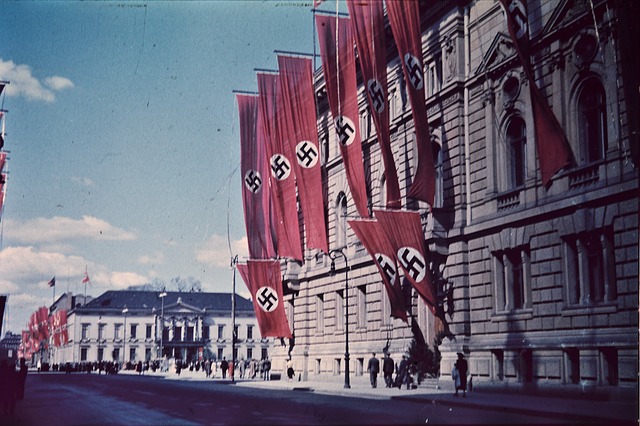
Introduction. Adolf Hitler and the National Socialist Party gained power in 1933 and would govern Germany until the end of World War Two (1945). By 1934, his Nazi government had become a dictatorship, with Hitler as the Fuhrer. With bolstered state powers, they persecuted  “enemies of Germany,” such as Communist Party members, Social Democrats, and labour groups. Hitler also targeted those deemed unfit according to the Nazi racial hygiene agenda – people of colour, gypsies, criminals, the mentally and physically challenged and above all, Jews. The Nazis dismissed people from their jobs, confiscated property, locked people in prisons and concentration camps, sterilized the “unfit,” and executed millions. 

A Debate. How was it possible for the Nazis to persecute various groups – especially- Jews without significant resistance from German citizens? Many historians have addressed this question. Some scholars argue that German citizens complied with and supported and even initiated the persecution and slaughter of Jews and other groups. Others insist that most Germans disapproved of Nazi domestic persecution and terror but did not speak out for fear of Nazi retribution, including loss of property or career, imprisonment, and execution. 

Nazi Terror and Retribution. When Hitler and the National Socialist Party took power in 1933, they began centralizing control of Germany. According to Richard Evans, the main instrument of coercion was the law. The Nazis passed laws and decrees that broadened what constituted treason and people’s options for freedom of expression. For instance, it became legal to ridicule Hitler, to make derogatory remarks against the Nazi party, or to “discuss alternatives to the political status quo.” (Evans,101)  

Speaking out against Nazi policies or assisting the persecuted could result in severe retribution. In Why? Explaining the Holocaust (2017),  Peter Hayes points out that “overt assistance to Jews constituted sabotage punishable by death”  and cites the example of Nazi Anton Schmidt, who facilitated the escape of at least 100 Jews after witnessing the execution of Jewish infants. After being exposed, he was court-martialed and executed. (145-146).   

Surveillance and intimidation proved effective deterrents to dissent. The Nazi secret police (Gestapo) did not have many men at their disposal but still “infiltrated people’s lives – directly, indirectly and psychologically.”  (Childress, 319).   Gestapo agents performed late-night arrests and interrogations. Germans were encouraged to report transgressions of Nazi law by their peers, neighbours and even family. Those charged faced a dubious legal process through what Richard Evans describes as a “whole system of regional Special Courts, crowned by the National People’s Court, the Volkgerichlen, was created to implement these and similar laws. (Evans, 101)

These historians argue that the Nazis organized an effective program of intimidation and coercion that effectively discouraged Germans from resisting the Nazi racial hygiene program.  

Citizen Complicity. Other scholars believe such interpretations overstate the extent of Nazi control while neglecting the willingness of German citizens to facilitate and even initiate the persecutions. In Hitler’s Willing Executioners: Ordinary Germans and the Holocaust (1997), Daniel Goldhagen acknowledges Nazi government coercion but argues that the main driving force behind the Holocaust was deep-seated, specifically German antisemitism.  

Goldhagen relates a story about Captain Wolfgang Hoffman, “a zealous executioner of Jews” who led “ordinary men” to slaughter tens of thousands of Jews in Poland. (3). Hoffman, he points out, refused to sign a declaration that his group would not plunder and steal from the persecuted Jews. Why did he refuse? Hoffman took offence that he and the men under his charge would steal. Besides the irony that Hoffman enthusiastically killed people, Goldhagen points out that Hoffman was not punished for refusing a direct order. In order words, Hoffman had a choice. By extension, his persecution of Jews came not from fear of retribution but from personal conviction—a willing executioner. 

Goldhagen goes on to argue that historians have focused on the leaders of the Nazi regime while neglecting people like Hoffman who facilitated the execution not from fear of Nazi retribution but out of a conviction that stemmed from “a particular type of antisemitism that led them to conclude that the Jews ought to die.”

Goldhagen’s thesis hinges on pervasive  German-specific antisemitism – a point of controversy among historians.   In Hitler and the Holocaust (2001), Robert S. Wistrich argues that Goldhagen overstates the role of German eliminationist antisemitism in the Holocaust. Germans certainly facilitated the killings, but this didn’t stem from a longstanding eliminationist mindset in the mid 19th century. Before Hitler, Wistrich argues, “racist antisemitism had not made great inroads in Germany” and was “still a state based on the rule of law, where Jews achieved remarkable economic success, were well integrated into society, and enjoyed equal rights.” (4)  

Selective Nazi Terror. In Nazi Terror: The Gestapo, Jews and Ordinary Germans (1999), Eric Johnson agrees with Goldhagen that many ordinary Germans willingly facilitated terror campaigns, persecutions and genocide. He also acknowledges the role of Nazi coercion but disagrees with Evans on the extent of Nazi coercion. He argues that Hitler’s government did not terrorize most Germans but instead focused the terror against “enemies of the state” – especially Jews. Most German citizens were not directly impacted by Nazi terror and “enjoyed considerable space to vent their everyday frustration with Nazi policies and leaders without inordinate fear of arrest or prosecution. (19)

Richard Evans disagrees with Johnson’s presentation of selective Nazi coercion and persecution. Nazi violence focused more on particular groups but “operated across the board.”(199). In 1933-4, for instance, the Nazis targeted the political leaders of the Social Democratic and Communist parties, such as Social Democrat Johann Steller, who “was tortured to death. (93).   Together, Evans notes, “the Social Democrats and Communists had won 131 million votes in the Reichstag election of 1932.” (94). “Hardly,” he points out, “members of a despised minority of social outcasts.”(94)

Self Interest and Opportunism Another historian who does not see antisemitism as the main factor in Holocaust is Joseph D. Bendersky. In A Concise History of Nazi Germany (2014), Bendersky argues that “the Jewish question had not been important to most German” who were more concerned with “moral degeneracy, crime, political subversion, and public order.” (139). Accordingly, the persecution of Communists, sexual deviants, and violent criminals received public support. He places more weight on other factors, including economic self-interest and the “terror of the police state.” (141)  Regarding self-interest, Bendersky notes how although a “Large segment” of German were shocked by Nazi violence, many opportunistically filled the Jewish vacancies in various professions, civil service positions, and businesses as Nazis pushed Jews out of their jobs. “Profit at the expense of the Jews was a temptation too many could not resist.” (139). Like Evans and Hayes, he adds that the Nazi use of terror deterred resistance and many who persisted paid the price. “Countless individuals,” Bendersky writes, paid with their lives for speaking out or for attempting to save others from Nazi tyranny. (141)

Conclusion. The role of German citizens in Nazi persecution, and particularly the Holocaust, remains a contentious topic and one that scholars will grapple with for many years to come. Hitler’s Nazi regime indeed used terror and reward to encourage German complicity. Some Germans, of course, engaged in the persecutions of “German enemies” with horrific enthusiasm. The longstanding question remains. Which factored more, coercion or complicity?

Bibliography

Aly Gotz, Peter Chrousti and Christine Ross. Cleansing the Fatherland: Nazi Medicine and Racial Hygiene. Baltimore: Johns Hopkins University Press, 1994.

Barnet, Victoria J. Bystander: Conscience and Complicity During the Holocaust. Westport, CT: Praeger, 1999

Bendersky, Joseph W. A Concise History of Nazi Germany. New York: Rowman and Littlefield Publishers, Inc. 2014.

Benz, Wolfgang. A Concise History of the Third Reich. Berkeley: University of California Press, 2006

Bergen, Doris L.  Twisted Cross. The German Christian Movement in the Third Reich. Chapel Hill, 1996.

Childress, Thomas. The Third Reich. A History of Nazi Germany. New York: Simon Shuster, 2017.

Marc Dewey, Udo Schagen, Wolfgang U. Eckart & Eva Schoenenberger, “Ernst Ferdinand Sauerbruch and His Ambiguous Role in the Period of National Socialism”, in Annals of Surgery 244 (2006), pp. 315- 321.

Friedlander, Saul. Nazi Germany and the Jews, Vol. 1 The Years of Persecution, 1933-1939. New York: 1997.

Goldhagen, Daniel Jonah.  Hitler’s Willing Executioners. Ordinary Germans and the Holocaust. New York: Random House Inc., 1997.  

Hamerow, Theodore S. On the Road to the Wolf’s Lair. German Resistance to Hitler. London, 1999

Hayes, Peter. Why? Explaining the Holocaust. New York: W.W. Norton Inc. 2017.

Johnson, Eric A. Nazi Terror: The Gestapo, Jews, and Ordinary Germans. New York: Basic Books, 1999.

Lifton, Robert J. The Nazi Doctors: Medical Killing and the Psychology of Genocide. New York, 1986.

Kershaw, Ian. The Nazi Dictators: Problems and Perspectives of Interpretation. (London, 1993).

Proctor, Robert N. Racial Hygiene: Medicine Under the Nazis. Cambridge MA: Harvard University Press, 1998. 

Schmidt. U.H. Karl Brandt: The Nazi Doctor. New York: Continuum, 2007

Shirer, William. The Rise and Fall of the Third Reich. New York: Simon and Shuster, 1960.

Stern, Fritz. Five Germans I have Known. New York: Farar, Straus, and Giroux, 2006. 

Thomas, Gordon and Gary Lewis. Defying Hitler: The German Who Resisted Nazi Rule. New York: Random House, 2019. 

Wistrich, Robert S. Hitler and the Holocaust. London, The Orion Publishing Group, 2001. 

Wistrich, Robert. Who’s Who in Nazi Germany. London, 1995.

Eugenics: An Introduction

Eugenics. The science of improving the population by controlled breeding for desirable inherited traits. From the Greek eugenes, meaning well-born.

Animal Husbandry.  The science of breeding.

In 1883, Francis Galton, first cousin to Charles Darwin, coined “eugenics”, a pseudoscience that advocated controlled reproduction to ensure the healthy evolution of human societies.  Eugenics became increasingly popular in the early 20th century, solidifying racial hierarchies and categories of the unfit – criminals, the mentally ill, and the feebleminded.  Programs in various countries encouraged the “fit” to reproduce while discouraging the unfit through measures ranging from segregation to elimination.

Francis Galton (1822-1911) Francis Galton grew up in England and inherited a significant fortune after his father died.  His extensive travels to places like Africa reinforced his sense of a rigid hierarchy of human categories.  He was not alone in this thinking as racial and ethnic determinism pervaded Western thought during the 19th century.  Darwin’s publication of the Origin of Species (1859) further inspired Galton to pursue social betterment through selective breeding. Galton believed that humans evolved through the natural selection of inborn traits, and parents transmitted intellectual and moral qualities to their children. He acknowledged social factors but insisted that inherited talent (or lack of) persevered.  

Turn of the Century:  Eugenics takes off. Various factors played into eugenics growing popularity into the 20th century.  The “rediscovery” of Gregor Mendel’s claims of heredity as the dominant determinant in human life bolstered eugenic claims of biological determinism.  Visible signs of poverty, crime, and mental illness accompanied urban growth evoked concerns about societal “degeneration” – an oft-used term at the time.  As Diane B. Paul writes, “Middle-class people of every political persuasion – conservatives, liberals, and socialists, were alarmed by the apparent profligate breeding of what in Britain was called the “social residue.” (Paul, 235)

Alarmed by these developments and confident in their theories of selective reproduction, eugenics advocates began implementing practices to realize their visions.  Scholars have identified these practices as “positive” and “negative” eugenics. 

Positive Eugenics. Positive eugenics involved the promotion and practice of the selective breeding of the “fit.”  He pointed to the example of animal husbandry as a model to follow.  “If a twentieth part of the cost and pains,” he said, “were spent in measures for the improvement of the human race that is spent on the improvement of the breeding of horses and cattle, what a galaxy of geniuses might we create!  (Larson 180).

Negative Eugenics in Practice. The early focus on positive eugenics would give way to prohibitive measures in the twentieth century.  In the United States, Canada, and much of Northern Europe, as well as Britain, the central question was how best to discourage breeding by moral and mental defectives.” (Crook, 235)  The practice of eugenics ranged from segregation to extermination.  Practices also varied over time and from country to country.  Generally, the initial approach involved the segregation of male and female “defectives”. Some feared another option, sterilization, would promote images of extremism—however, institutional expenses coupled with improved sterilization technology made this alternative a more popular choice.  Accordingly, governments legalized the practice. Sterilization laws, for instance, had been passed in 30 American states and 3 Canadian provinces. (Paul, 236) 

Not surprisingly, the worst expression of eugenics occurred in Nazi Germany.  The Aktion T-4 programme and subsequent programs “euthanized” up to 200,000 of the country’s institutionalized mentally and physically disabled, some with the tacit consent of the families. (Paul, 236)  

Opposition.  Predicably, eugenics attracted virulent opposition from the Catholic Church, labour groups, liberal politicians, and scientific community members. The Catholic Church, already opposed to abortion and contraception, vehemently opposed sterilization. Labour groups spoke out against eugenics, knowing that many working and lower classes, especially immigrants, fell into eugenic categories of unfit.  Scientists readily challenged eugenic claims and the Mendelian foundation by highlighting the nurture side of the nature vs nurture debates of the time. 

Conclusion.  Blatant Nazi atrocities in the name of racial hygiene, coupled with scientific exposures of its falsities, undermined eugenic claims.  However, it did become one of the most influential and devastating of the broader social Darwinist movement.

This blog offers a rudimentary introduction to eugenics.  Future blogs will address more specific aspects of this topic.

Selected Bibliography

Cowan, Ruth Schwartz. Francis Galton and the Study of Heredity in the Nineteenth Century. New York: Garland, 1985.

Crook, Paul. Darwin’s Coat-Tails: Essays on Social Darwinism.  New York: Peter Lang Publishing Inc., 2007.

Larson, Edward J.  Evolution: The Remarkable History of a Scientific Theory.  New York: Modern Library, 2006. .

Paul, Diane B. “Darwin, Social Darwinism, and Eugenics.”  Jonathan Hodge and Gregory Radick eds.  The Cambridge Companion to Darwin.  New York: Cambridge University Press, 2009

Social Darwinism. An Introduction

 In 1859, Charles Darwin (1809-1882) published On the Origin of Species by Means of Natural Selection.  In it, Darwin convincingly argued that all species evolved by adapting through an ongoing struggle for survival.   The book is considered one of the most influential in the natural sciences.  However, Darwin’s influence would go well beyond the biological.  Shortly after the Origin of Species publication, people began speculating on the social implication of Darwin’s theories.  

“Social Darwinism,” a term for various social theories allegedly based on Darwin’s work, described individuals and societies competing for limited resources where the fittest survived and reproduced.  These theories provided intellectual fodder for racism, imperialism, militarism, political and economic conservatism, and misguided public health practices.   

What is Natural Selection?  In other blogs, we go into more detail about Darwin’s theories.  For now, here is a 5-point synopsis of natural selection.   

  1. More species exist than their environments can sustain.
  2. As a consequence of 1, all species are in a perpetual struggle for survival.
  3. Individual members of each possess variations or traits. 
  4. Those with favourable traits survive and reproduce, passing on these traits.
  5. Over generations, as traits pass, species evolve to survive in their environment—those who don’t perish.  

Origin of Species focused on plants and animals and did not address human evolution.  However, social theorists enthusiastically applied Darwinian biological concepts to human society, identifying societies as individuals competing in a struggle leading to the evolution and improvement of nations, classes, and races.

Adam Smith, Thomas Malthus, Herbert Spencer. The notion of competition between individuals and groups as inevitable and necessary predated Darwin and increasingly pervaded the 19th century.  Adam Smith advocated an economic model based on competition and minimal state intervention in his seminal work The Wealth of Nations (1776).  In his Essay on the Principle of Population (1798),Thomas Malthus, a clergyman, argued that people competed as populations outstripped limited resources – food, land, wealth.  Some, of course, would fall, but the strongest would survive. This competition, he insisted, led to social betterment, so state or private efforts to alleviate poverty were against nature.  Perhaps the strongest advocate of Social Darwinism was Herbert Spencer, who coined “survival of the fittest” in his Principles of Biology (1864).  The term helped bring attention to Darwin’s work and led to more applications to human society, including race, politics, economics, and medical practice like eugenics and euthanasia.

Politics, Social Inequality, Economics. Conservatives, concerned with the rising population of lower classes, cited natural selection as justification for refraining from poor relief in towns and cities.   Malthus and Spencer, two vehement individualists, insisted that poverty arose from flawed character and that state support for the poor contradicted the rules of nature and weakened society.  Similarly, industrialists like John D. Rockefeller and Andrew Carnegie justified low wages and laissez-faire business practices that exploited weakness.  In The Gospel of Wealth (1900), Carnegie applauded “the concentration of business, industrial, and commercial, in the hands of a few and the competition to the progress of the race.” (4)

Race and Imperialism.Jacque Barzun writes that “The 19C was the heyday of physical anthropology, which divided mankind into three or more races” and “taken for an exact science in spite of its conflicting statements.” (577). Social Darwinism offered “scientific” support for racial categories that hardened in the latter part of the 19th century. Theorists applied Social Darwinist principles to nations.  Nationalists and imperialists appealed to social Darwinism to explain and justify colonial control of inferior ethnic groups and races, offering a rationale for displacement, unfair laws and even genocide.  For example, British naturalist Alfred Russell Wallace supported European expansion at the expense of the “savage” and “inferior” indigenous peoples in the Americas and other continents.  Karl Pearson argued that the higher state of civilization arose racial struggle and the resulting survival of the physical and mentally fittest race. (Perry, 594)

An Infamous Legacy. Social Darwinism extended into the 20th century carrying its flawed reasoning and destructive implications with it.  Eugenics, founded by Darwin’s cousin Francis Galton, inspired the sterilization and euthanizing of people deemed “unfit” – the mentally ill, criminals, developmental delayed, and people of colour – in countries like Canada, the United States, and especially Germany.  Marvin Perry contends that “The Social Darwinist notion of the struggle of the races for survival became a core doctrine of the Nazi Party after World War 1 and provided the scientific and ethical justification for genocide.  (596). Social Darwinist theories began to wane by the middle of the 20th century, mainly as Nazi atrocities realized many of the morbid implications of Social Darwinist thinking, including sterilization and, of course, the Holocaust. 

Selected Bibliography

Barzun, Jacques.  From Dawn to Decadence, 1500 to the Present: 500 Years of Western Cultural Life.  New York: Harper Collins Publishers, 2000.

Carnegie, Andrew.  The Gospel of Wealth. New York: Century, 1900. 

Hofstader, Richard. Social Darwinism in American Thought. 1955.

Koch, H.W. ed.  The Origins of the First World War. New York: Taplinger, 1972. 

Olson, Richard, ed., Science as Metaphor.  Belmont, California: Wadsworth, 1971. 

Perry, Marvin. Ed. Western Civilization: Ideas, Politics, and Society. New York: Houghton Mifflin Company, 2000.

The Enlightenment: An Introduction.

Dare to Know. Immanuel Kant

The consent of the people is the sole basis of a government’s authority.  Jean-Jacques Rousseau

The Enlightenment occurred during the “long 18th century”, between the 1690s to the 1810s.  Some historians describe it as the foundation of the modern world.  Others argue that such claims exaggerate the movement’s impact while understating the influence of previous periods such as the Renaissance.  What is the Enlightenment?  How is it distinct from other periods?  What impact did it have on Europe and other parts of the world?  Here we offer a brief overview of the period.  We will discuss various elements of the Enlightenment in other blogs. 

What is the Enlightenment?  Defining the Enlightenment is a formidable challenge.  As Anthony Pagden points out, for all the mass historical industry that has grown up around the Enlightenment, we are still far from certain what all this means.” (16)  Essentially, the Enlightenment was a cultural movement that espoused reason and observation (rather than tradition, superstition and religion) as the means of uncovering the rules of nature and society.  Enlightenment thinkers addressed issues around psychology, government, economics, religions and much more. 

 We should not, however, interpret “a cultural movement” as a coherent one. Enlightenment thinkers came from various nationalities and social classes and often disagreed on critical problems around politics, religion and various social matters.  Accordingly, historians such as J.G.A. Pocock argue for various “Enlightenments” of unique character rather than one broader movement or, as J.M. Roberts writes, “the advance of a united army of the enlightened.” (635). Even with this diversity in mind, we can say that Englightenment thinkers promoted reason and observation as the primary (and sometimes only) means of interpreting and organizing nature and human society. 

 Why this turn to reason and empiricism?  What were the preconditions that encouraged the Enlightenment(s)?  Here, two broad developments come into play – the Scientific Revolution and religious division and conflict of the seventeenth and eighteenth centuries. 

The Scientific Revolution.  During the 17th century’s “Scientific Revolution,” breakthroughs from scientists (known as natural philosophers at the time) like Galileo Galilei and Isaac Newton encouraged the Enlightenment in two ways.  First, their discoveries discredited many of the traditional Christian explanations of natural phenomena.  Secondly, the Scientific Revolution demonstrated how reason, observation, and experiment could reveal the workings of nature.  From this, writes Norman Davies, “grew the conviction that reason could uncover the rules that underlay the apparent chaos of both the human and material world and hence of natural religion, of natural morality, and natural law.” (597).

This exaltation of rational thinking came at a time when various forces undermined Catholicism’s authority. 

Religious Division and Conflict.  “No single thread,” writes Marvin Perry, “had united Western culture more powerfully than Christianity.” (434). The Catholics church stood as the supreme authority on all matters, and this remained true until the Protestant Revolution (1517) undermined Catholic theology and doctrine that offered a unified world vision.  Soon, other sects like Calvinism and Anabaptism arose, offering competing visions and feeding skepticism.  More options appeared as Europeans travelled and mingled with other civilizations’ belief systems such as Confucianism and Buddhism. 

 Incessant sectarian violence during the 16th and 17th centuries, epitomized by the Thirty Years War (1618-1648), further undermined confidence in religion as the bedrock of European society.  Not surprisingly, some people embraced alternative options of reason and observation to bring order back to their lives. 

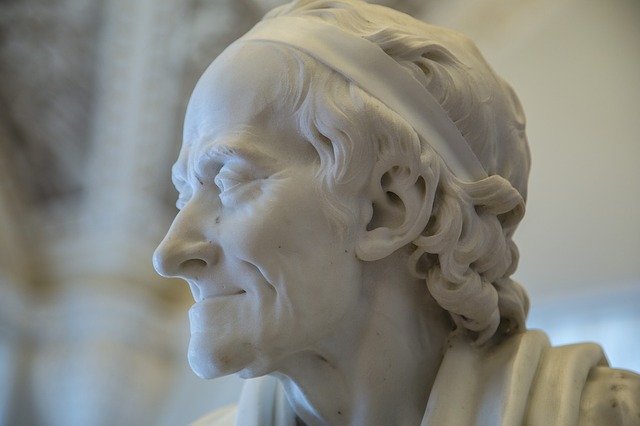
How did Enlightenment ideas spread?  Most Europeans remained illiterate, and those who could read would be hard-pressed to understand the complexities of Galilei’s discoveries or Newtonian theory of falling bodies. These theories had to be translated to non-experts.  Accordingly, many Enlightened thinkers devoted their efforts to popularize the ideas of the Scientific Revolution.  Thinkers like Bernard de Fontenelle (1657-1757) – presented scientific ideas in accessible ways.  In one work, de Fontenelle shows a man explaining Newtonian theories to a woman.  Denis Diderot’s twenty-eight volume Encyclopedia, published between 1751 and 1765, included entries on various topics by luminaries such as Voltaire and Jean-Jacques Rousseau.

Such efforts to spread Enlightenment ideas benefitted from a rapidly growing print culture – books, pamphlets, newspapers –  and a more gradual rise in literacy offered growing opportunities for these ideas to reach more people.  Ideas also spread via social gatherings as people like Parisian Marie-Therese de Geoffrin organized meetings to discuss science and the ideas inspired by these discoveries.   

Pervasive Critique.  Enlightenment thinkers applied reason and observation to all aspects of life – natural philosophy(science), politics, religion and an array of social matters.  Whether through writings or conversation, very few assumptions, traditions, or institutions escaped the critical gaze of Enlightenment thinkers.  Religion and politics certainly attracted the Enlightenment gaze.   

A Critique of Religion.  Religion had always attracted critics.  Desiderius Erasmus, for instance, pointed out the different versions of the Bible that evolved from transcribers.   But as Marvin Perry writes, the Enlightenment “produced the first widely read, and systematic assault on Christianity launched from with the realm of the educated. (Perry, 434) These challenges happened during an era of Christian disunity fomented by the Protestant Revolution (1517) and the subsequent proliferation of Christian sects that, along with the Scientific Revolution, facilitated alternative ways of thinking about the world.     

 Debate continues regarding the extent of this assault.  Isaac Krammick, for instance, identifies religion as the “principal villain of the Enlightenment.” (xii). Indeed, thinkers such as Claude Helveta, Denis Diderot, and Baron d’Holbach adopted atheistic stances and identified religion as an obstacle to knowledge and progress.    Scottish philosopher David Hume dismissed religion as founded on superstition and fear.  Peter Bayle, a Protestant clergyman, suggested that Christian dogma be rejected if not according to rational thinking.

Atheism, however, was the exception as most Enlightenment figures believed in God.  Newton himself wrote on religious matters and described God as a clockmaker who created the world and its natural laws that humans could interpret and observe.  Europeans, in general, remained faithful.  Also, numerous religious revivals occurred during the 18th century along with a missionary zeal that accompanied and, to some extent, inspired European expansionism.  Secularism did not dominate the 18th century, but the Enlightenment did encourage its growth into the 19th and 20th centuries. 

Politics. Enlightenment thinkers devoted much attention to politics, particularly royal absolutism and the checking of monarchial power.   Kingdoms across northern Europe had appealed to the Divine Right of Kings, believing that God granted the monarchy exclusive right to rule and any breach of this as sacrilegious.  Thinkers such as Thomas Hobbes, John Locke, and Jean Jacques Rousseau espoused different assumptions about human nature but agreed on the need to curb or even abolish royal absolutism. 

Their ideas encouraged the revolutions of the time.  Many factors played into Britain’s Glorious Revolution (1688), but it is reasonable to say that the political thought of Hobbes, Locke and others encouraged replacing a Divine Right of Kings with a parliamentary-based monarchy.  Inspired by writings such as Rousseau’s The Social Contract, the French Revolution also ended religious-based authority and dissolved the traditional feudal system.  Across the Atlantic, the new nation, the United States, created a constitution in 1776 and Bill of Rights inspired by Enlightenment thinker John Locke and Baron de Montesquieu’s Spirit of the Laws (1748) that called for a limited monarchy with a division of power among an executive, parliament and judiciary.

Conclusion. As difficult as defining the Enlightenment, it is equally challenging to discern the nature and extent of its impact.  Historians nonetheless offer their opinions on the movement’s fallout.  Anthony Pagden argues that the Enlightenment had a “far greater and more lasting impact on the formation of the modern world than any of the intellectual convulsions that preceded it. (Pagden, ix)  “Enlightened thought, contends Marvin Perry,  “culminated a trend begun by Renaissance humanists who attacked medieval otherworldliness and gave value to individual achievement and the worldly life. (Perry, 459) 

Although historical assessment varies, it is reasonable to say the Immanuel Kant’s call for contemporaries to “Dare to know” reflected confidence in the human capacity to understand society and the natural world without deference to traditions or clerical authority.

Selected Bibliography.

Cassirer, Ernst. The Philosophy of the Enlightenment. Princeton, N.J. Princeton University Press, 1951. 

Davies, Norman.  Europe: A History.  London: Random House, 1997

Dupre, Louis. The Enlightenment and the Intellectual Foundations of Modern Culture.  New Haven: Yale University Press, 2004

Edelstein, Dan.  The Enlightenment: A Genealogy.  Chicago: University of Chicago Press, 2010.

Elian-Feldon, Miriam et al., eds.  The Origins of Racism in the West.  Cambridge: Cambridge University Press, 2009. 

Gay Peter. The Enlightenment: An Interpretation. New York: Knopf, 1966.

Goodman, Dena and Kathleen Wellman, eds, The Enlightenment. New York: Houghton Mifflin Co., 2004.

Israel, Jonathan.  Enlightenment Contested: Philosophy, Modernity, and the Emancipation of Man, 1670-1752.  New York: Oxford University Press, 2006.

Jacob, Margaret.  The Enlightenment. A Reader. (1999).

Kramnick, Isaac. ed.  The Portable Enlightenment Reader. New York: Penguin Books, 1995.

Outram, Dorinda. The Enlightenment.  Cambridge: Cambridge University Press, 2005.

Perry, Marvin et al.  Western Civilization: Ideas, Politics, and Society.  New York: Houghton Mifflin Company, 2000. 

Spielvogel, Jackson J.  Western Civilization.  Volume B: 1300-1815.  Boston: Wadsworth, 2012.

Six Reasons to Study History

At some point, in elementary and high school, you took a history course.  The curriculum focused on your country or continent (e.g. European History).  Being from Canada, I learned about the Fur Trade, French and English competition in North America, national and provincial politics, and a smattering of other topics. 

However, no one told us why we studied history.  We didn’t learn how studying the past could benefit us, enrich our lives and teach us skills to help us navigate careers and even our lives.  School teachers omitted the most fundamental question: Why study history? 

Perhaps addressing this fundamental question would evoke more interest and appreciation in the subject

Historians have written extensively on the importance of understanding the past.  After careful consideration, we have distilled these explanations into six reasons to study history. 

  • Understand the Present.  “Everything,” Jules Benjamin writes, “that exists in the present has come out of the past.”  Our material life, for instance, grew out of past developments.  The Agricultural Revolution that began some 10,000 years led to farming, rising populations, and, as historians have recently pointed out, much of the environmental damage we contend with today.  Technologies have changed our lives – papermaking in China, the Gutenberg printing press, irrigation, gunpower, and computers, to name a few.  Politically, our borders, governing bodies, and values come out of the past.  Democracy, a Greek concept, hails back thousands of years, as does Confucianism, a significant factor in Chinese politics and culture.  Modern religious conflicts between the monotheistic religions – Judaism, Christianity, and Islam – can be better understood by delving into the past.  Current issues around race, gender, class and many others can be traced back in time.    
  • Understand Causation.  As Peter Stearns and Marcus Collins write, causation is the “factors which promoted a change in the first place.” (33). Not surprisingly, causation is a contentious matter among historians.  Regarding the decline of the Roman Empire, some historians emphasize external factors such as the growing determination and strength of the barbarians. In contrast, others have devoted more attention to internal factors such as corruption and financial mismanagement.  Whatever their positions, contemporary historians tend to agree that “most major developments respond to several factors, that is, multiple causations (34). Lessons about causation allow us to analyze current events with a more critical eye.  Conspiracy theorists, for instance, who point to Bill Gates or a secret New Order as the orchestraters of the COVID-19 pandemic, would be well served to study history and causation more carefully.  A recommended read – David Hackett Fischer’s Historical Fallacies: Toward a Logic of Historical Thought
  • Situate Events in Context.  Intrinsically linked to causation is context.  Context, in short, is the set of conditions in which events unfold.   Historians tell us that Serbian nationalist Gavrilo Princip’s assassination of Austria-Hungary’s Archduke Franz Ferdinand sparked the beginning of World War I.  They also rightly assert we need to explore the conditions in which Princip shot the Archduke – Great Power rivalries, militarism, nationalism, and various other factors came into play – to develop a fuller understanding of what happened.  Understanding context helps us understand events (past and present) in sophisticated rather than superficial ways. 
  • Challenge Abuses of History.  Somepeople use history to further their agendasHitler and the Nazis rewrote history to justify their actions.  Among other past abuses, they identified a longstanding Jewish conspiracy to undermine German society while espousing their contrived record of Aryan accomplishment and superiority.   We need to challenge these abuses.  As Margaret McMillan writes, “Politicians and other leaders too often get away with misusing or abusing history for their own ends because the rest of us do not know enough to challenge them. (36)  This is especially relevant now, in what some call the age of disinformation.  Politicians like Donald Trump casually refer to a great America of the past or fabricates “facts” about election fraud or other issues to reinforce his position.  Historical training, as Stearns and Collins point out, “helps people to handle different kinds of evidence and to sort fact from opinion and disinformation.” (9). After all, who wants to be lead astray by those informed by partisanship, opportunism, or lazy thinking?
  • Pleasure. The love of learning!Some people approach history simply for the joy of learning more about the past – tracing family trees, visiting exotic locations and past eras can be exhilarating and enriching.
  • Practical Skills. People often overlook the practical skills involved in historical study.  You learn how to research topics and interpret sources for their biases and background.   In the process, you assess various viewpoints and interpretations.  Communicating your views helps you develop critical thinking, organization, as well as your writing and verbal skills.   Universities, for instance, apply these skills to a variety of topics.  Entrepreneurs and business students examine case studies of businesses past and present to gain insights into how companies succeed and fail. Law schools refer to pasts decisions – precedence 

There are many other reasons to study history that we will explore in future blogs.  John Tosh writes that “historical education achieves a number of goals at once: it trains the mind, enlarges the sympathies and provides a much-needed perspective on some of the most pressing problems of our time. (35)   These factors, coupled with the pure pleasure of learning about our past, offer poignant reasons to explore history. 

Enjoy!

Selected Bibliography.

Benjamin, Jules R. A Student’s Guide to History.  Boston: St. Martins, 2001.

Collins, Marc and Peter N. Stearns.  Why Study History? London: London Publishing Partnership, 2020.

Fischer, David Hackett.  Historians’ Fallacies: Toward a Logic of Historical Thought.  New York: Harper Perennial, 1970. 

McMillan, Margaret. The Uses and Abuses of History.  Toronto: Penguin Group, 2008. 

Stearns, Peter N. et al. Knowing, Teaching, and Learning History.  New York: New York University Press, 2000.

Tosh, John. The Pursuit of History: Aims, Methods and New Directions in the Study of Modern History.  Essex: Pearson Education Limited, 1999.

Wineberg, Sam. Historical Thinking and Other Unnatural Acts.  Philadelphia, PA: Temple University Press, 2001.   

The Printing Press

William Manchester describes it as an “epochal invention” and “one of the great movements in the history of Western civilization. (95). “One of the most important technological innovations of Western civilization”, writes Jackson J. Spielvogel.   James McClellan and Harold Dorn write that this invention incited a “communications revolution” that  “altered the cultural landscape of early modern Europe.” (224)

 In 1453, craftsman Johannes Gutenberg (1398-1468) invented the printing press, which led to the mass production of printed works and incited massive change in Europe and the world.   How did Gutenberg achieve this?  What were some of the immediate and long-term effects of one of the most seminal inventions in human history? 

Before Gutenberg. For centuries, Europeans copied written works by hand, spending months transcribing works such as the Bible.  China, the inventors of paper, used more advanced copying technologies.  Printers began carving pages of text into woodblocks (woodblock printing) in the eighth or ninth century.  According to one Jesuit priest who lived in China in the late 16th century, this process could make 1500 copies per day – a much faster process than transcribing! (Headrick, 84).

Around 1045, Chinese inventor Phi Sheng created moveable (also known as interchangeable) type, using wax to attach individual ceramic characters to an iron frame. (Headrick 85)  Sheng’s invention allowed printers to rearrange symbols to create different texts. Woodblock printing, however, remained more practical, efficient, and cheaper than movable type printing. Chinese writing includes thousands of pictograph characters, which made arranging individual ceramic symbols an extremely time-consuming task. (143)

Movable-type, however, could be effective if applied to a writing system with a manageable number of symbols.

How did Gutenberg do it? Gutenberg allegedly created the printing press independent of Asian influence. There is some debate around this view.  We know, however, he used and modified recent inventions while adding his innovations.   Oil-based ink, already used to decorate textiles, offered a stable alternative for paper printing.  Gutenberg’s unique contribution is his development of moveable metal type.  He created steel signatures for each number, letter, and punctuation mark, then attached these symbols to a lead base and assembled them in a type tray. ( Parker, 580)  Next, he spread ink on the letters, lay a sheet of paper (or other material) over the letters, then used the press (adapted from the screw press used with wine presses and other applications) to impress the arranged symbols on the sheet. Symbols could be rearranged, reused and easily replaced, making for a relatively inexpensive process.  (Parker, 580) The twenty-six character Phoenician alphabet made movable-type more practical than the more elaborate Chinese lettering system. 

By modern standards, this seems like a tedious process.  Gutenberg, however, took a big step in mechanizing a process that enabled mass production of printed materials.  In doing so, he facilitated significant change in Europe and the world.     

Decentralizing Knowledge: The Spread of Ideas and Vernacular Languages. What were some of these changes? In practical terms, the printing press allowed people to mass-produce duplicate copies of written documents.  It offered a more accurate process than transcribing simple human errors.  Now, people could create identical copies of written materials such as pamphlets, posters, books, and sermons. 

Some lauded the invention as a victory for the spread of literacy and ideas.  Others feared it as a means of fomenting division.  The Holy Roman Empire, the overseer of a united Christendom, saw the rampant spread of printing as a threat to Christian unity.  As William Manchester points out, “Until late in the fifteenth century, most books and nearly all education had been controlled by the Church.” (Manchester, 95)   In part, this control entailed the exclusive use of Latin while discouraging and even outlawing vernacular languages such as German.  

The diffusion of knowledge, however, could not be controlled.  The production of printed material for the time is staggering.  By 1500 more than two hundred towns had print shops, and “almost 40,000 recorded editions of books had been published in 14 European languages, with Germany and Italy accounting for two-thirds. (Manchester, 92).  The Giolito Press in Italy, for instance, published numerous plays, poems and other works in Italian. 

These numbers increased exponentially in the following centuries.  Printing also made it easier to circulate ideas and opinions, including those that challenged traditional authority. Martin Luther’s famous 95 Theses (1521), criticizing the Catholic Churches sale of indulgences, were printed in German and widely circulated, driving the Protestant Revolution and Christian. 

Classical Literature and the Renaissance. Written works increasingly included a mix of religious and secular topics.  Gutenberg’s Bible sold well, as did Latin and Greek classics.  Printers noticed the growing appetite for classical works and strove to feed it.  Aldus Manutius, for instance, “set up the Aldine Press in Venice in 1495 to specialize in Greek, Latin, and early Italian classics.” (Parker 220) Aldus also published Greek dictionaries and grammar books. Historians identify an increasingly literate Europe with greater access to these classics leading to the classically inspired Renaissance.

Conclusion. Gutenberg’s printing press fostered a communications revolution that profoundly impacted Europe and the world.  More people learned to read and had greater access to a wider variety of ideas.  This diffusion of information – religious documents, philosophy, children’s books, science, classical texts – encouraged diversity while undermining the continent’s unity based on one language (Latin) and Catholicism’s pervasive belief system.  Printing also enabled papermaking, print shops, typefounding, publishing, writing, and other print-related industries.   

Gutenberg’s printing press certainly ranks among the top developments in the history of communications and, for some historians, it stands as one of the most outstanding achievements of all time. 

Selected Bibliography.

Cahill, Thomas.  Heretics and Heroes: How Renaissance Artists and Reformation Priests Created Our World.  New York: Anchor Books, 2014.

Headrick, Daniel R.  Technology: A World History.  New York: Oxford University Press, 2009

Manchester, William.  A World Lit Only By Fire: The Medieval Mind and the Renaissance.  New York: Little, Brown and Company, 1993.

McClellan, James and Dorn, Harold.  Science and Technology in World History: An Introduction.  Baltimore: Johns Hopkins University Press, 2015.  

Newman, Garfield.  Echoes from the Past: World History to the 16th Century. McGraw-Hill Ryerson Limited, 2001. 

Parker, Philip. World History: From the Ancient World to the Information Age. New York: Penguin Random House, 2017.

Spielvogel, Jackson J.  Western Civilization, Volume B: 1300-1815. Eight Edition. Boston: Wadsworth, 2012